

Creating a New Custom Action
Note: The ‘If’, ‘If else’, ‘For Each’, ‘Variable’, ‘Wait’, ‘Note’, and ‘End Run’ actions cannot be customized.
1
Navigate to Settings
On the right-hand side of the step, click the Save as new custom action option.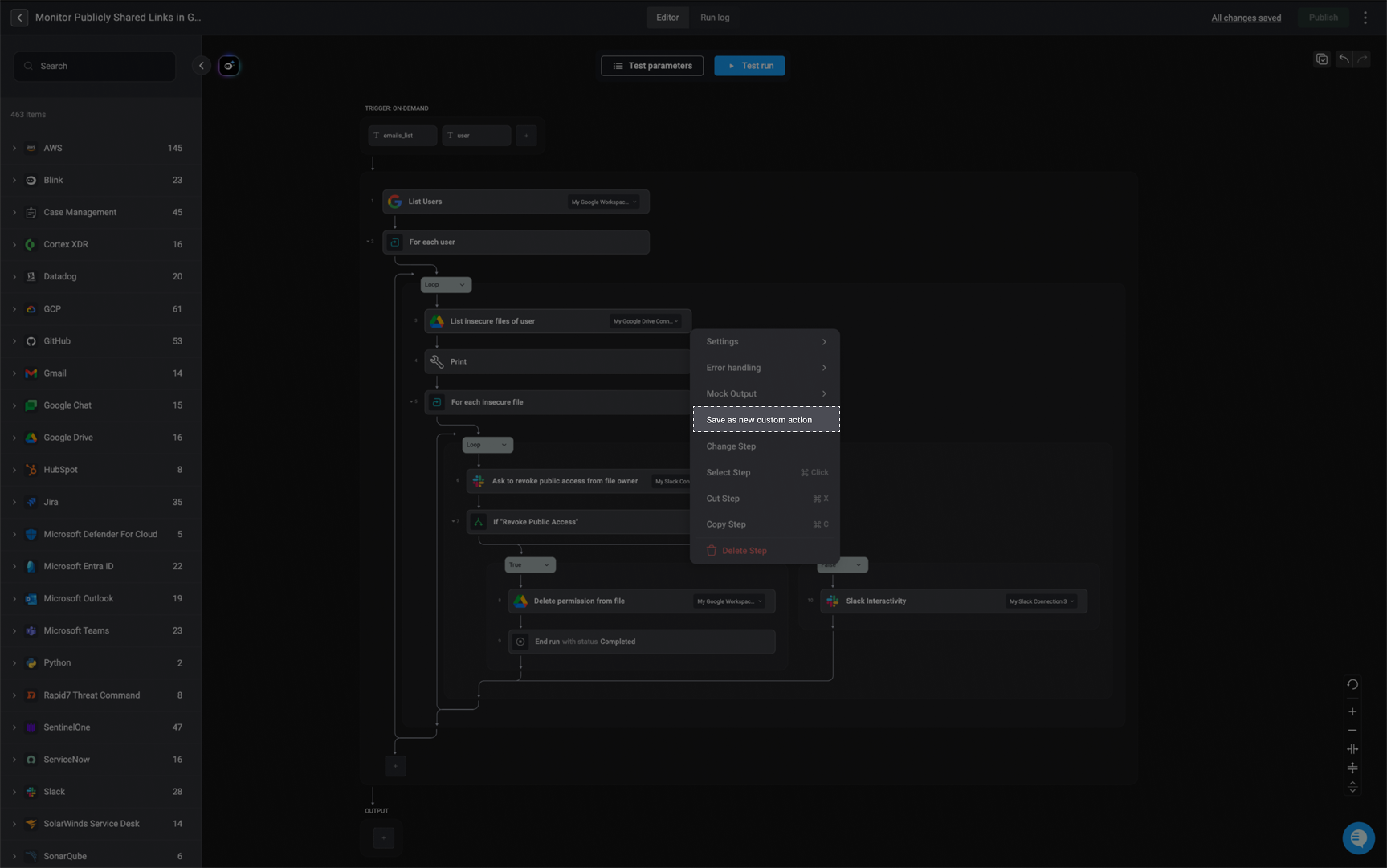
2
Configure the Custom Action
Enter the following parameters:
- A Custom Action name
- Select a Vendor or create a new one
- Enter a description
-
In Advanced Settings, you can edit the
YAMLformat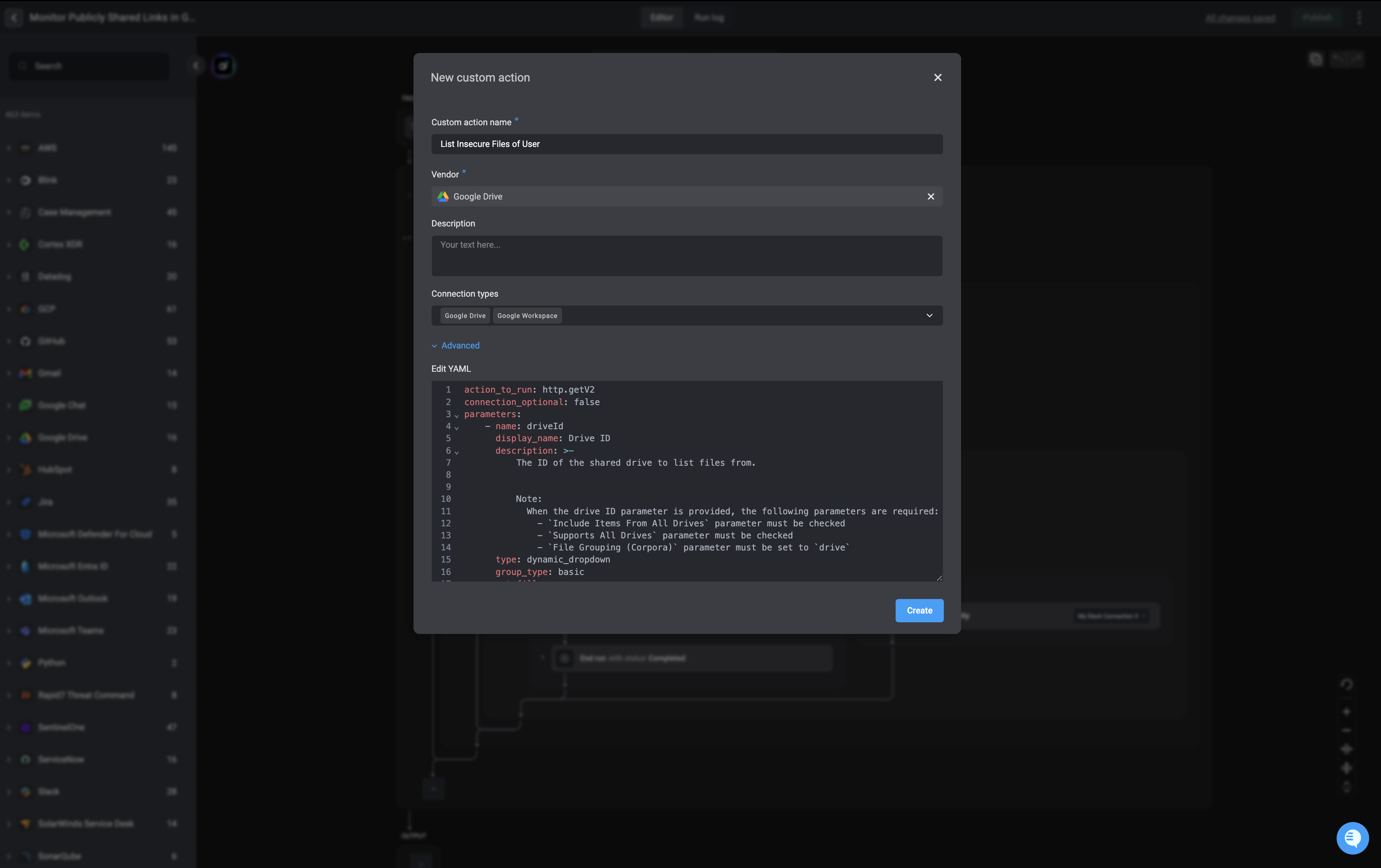
3
Save and Reuse
Note: A
custom action label will appear next to it, indicating that it is a custom action.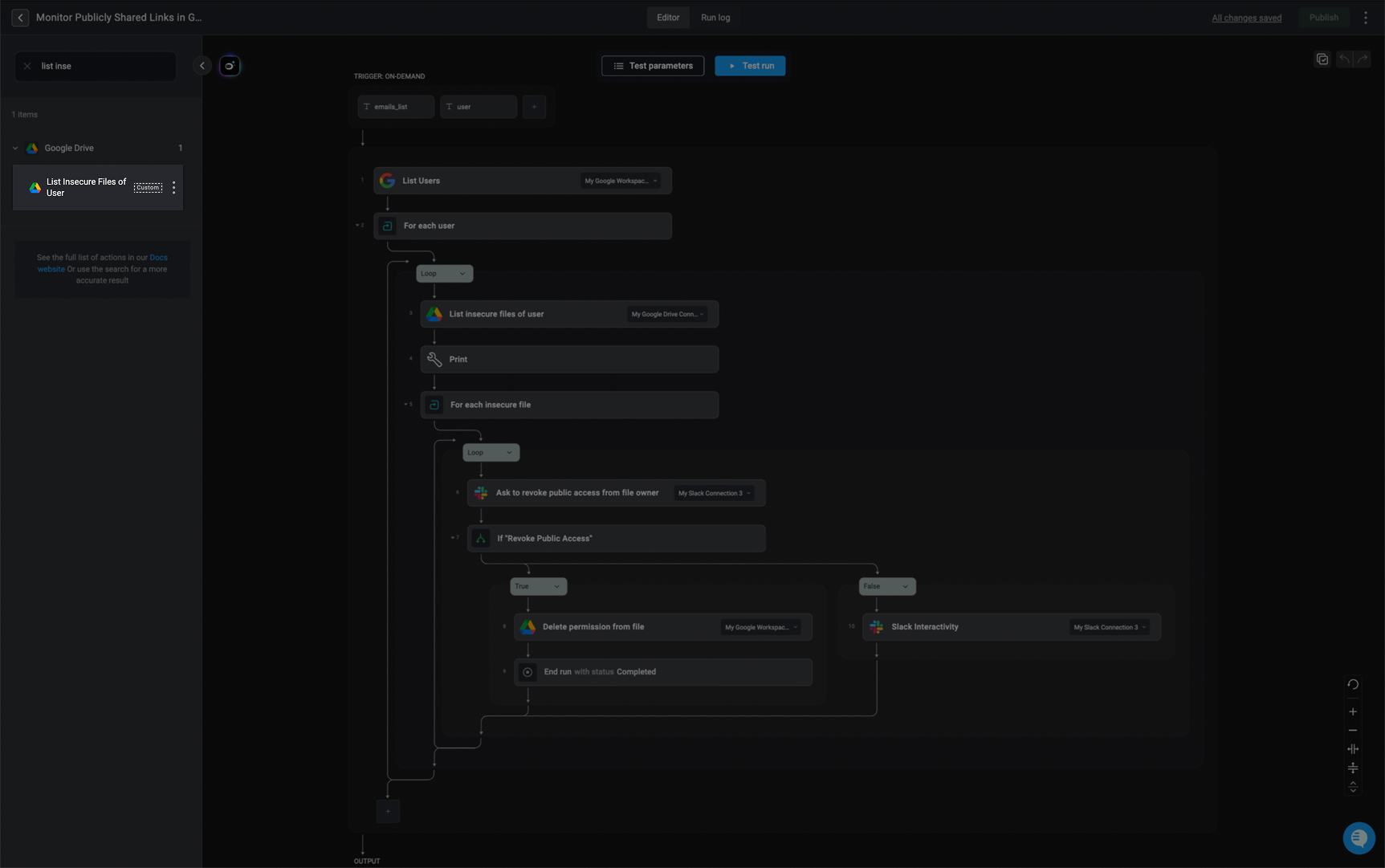
Editing a Custom Action
1
In the left-hand side action panel, click the and select the ‘Edit custom action’.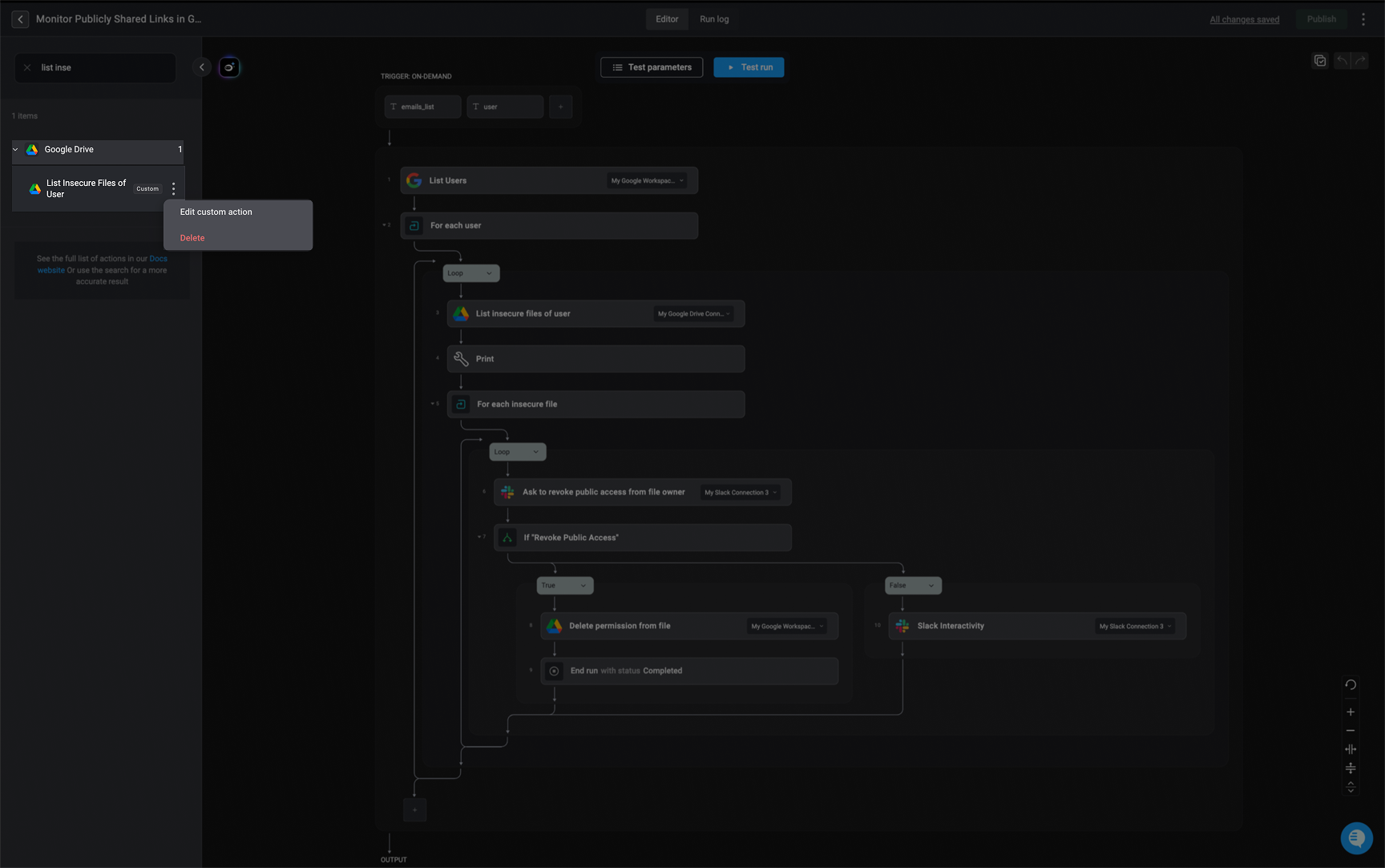
2
Make the necessary changes and click the ‘Update’ button to apply the changes.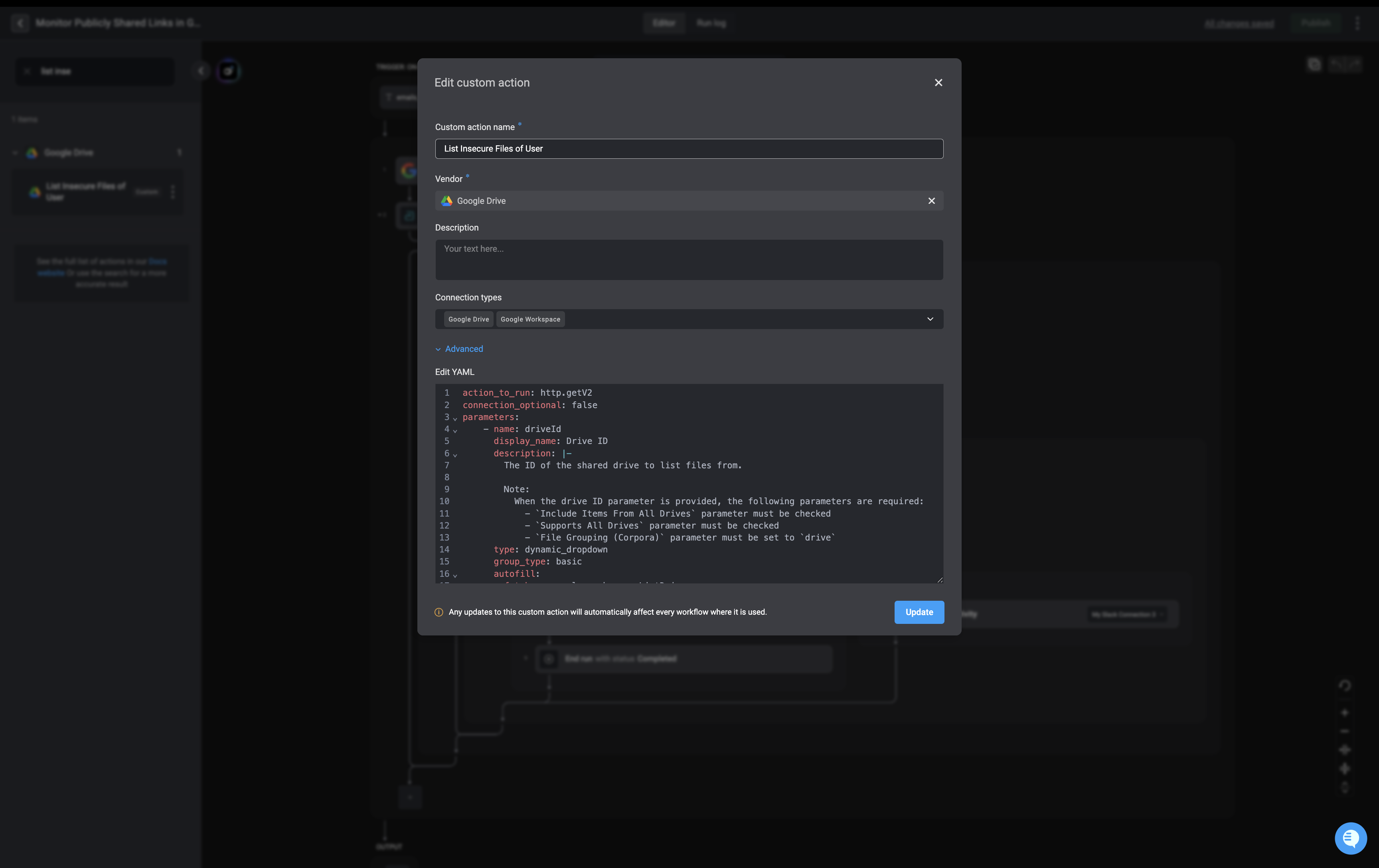
Using Custom Actions
Add a custom action to a step the same way as creating a regular step:- Drag and drop: To use a custom action, drag and drop the Action onto the canvas from the Action panel. At the top of the panel you can see the flow control actions and beneath them a list of external service providers. To see the available Actions, open a service.
- Inline adding: Click on the box in the middle of the canvas. Search for the custom action in the search bar and select it.
Configuring Custom Action Inputs
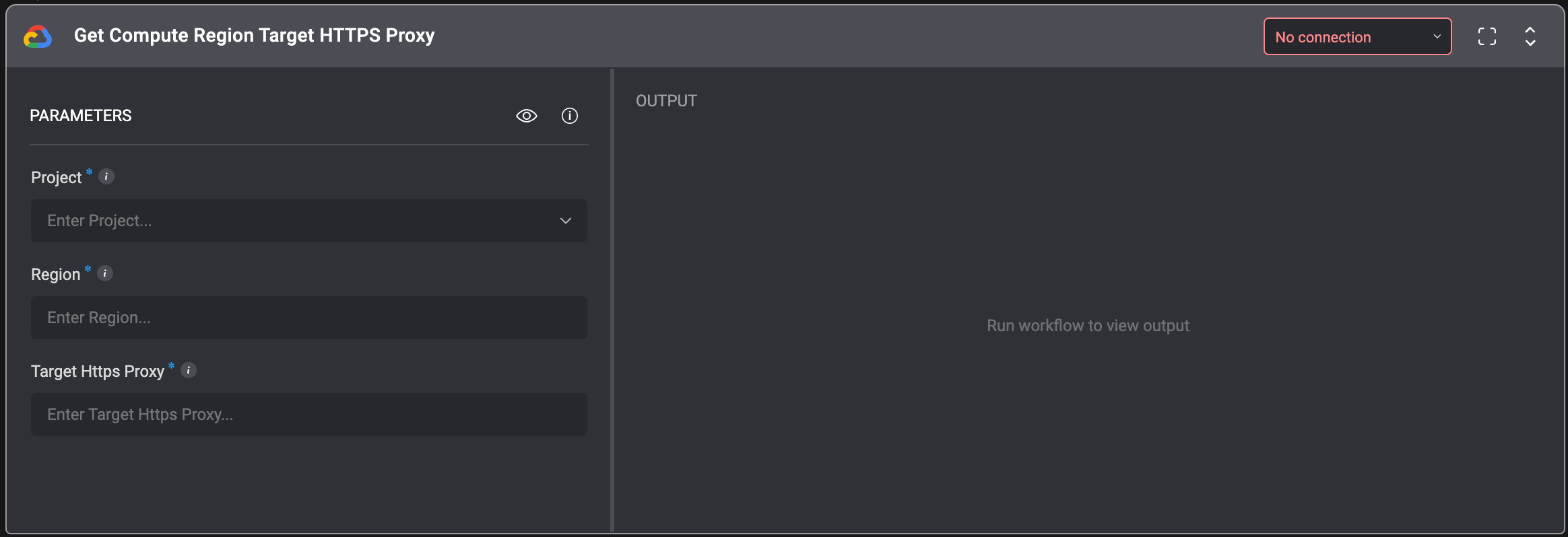
When you create a Custom Action, you can configure or edit its YAML in the Advanced Settings YAML editor. Inputs determine which values users can provide when they add the Custom Action to a workflow. This allows you to make the Custom Action reusable while controlling which parts of its configuration can be changed.Custom Action Input Types
When configuring a Custom Action, you can define the type of input users can provide. Select the input type based on the kind of value the parameter expects.Custom Action YAML example
Custom Action YAML example
Best Practices
Best Practices
When defining Custom Action inputs and parameters:
- Expose only the values that users need to configure.
- Use the input type that best matches the value the underlying custom action expects.
- Use descriptive display names.
- Choose an input type that matches the expected value.
- Use required inputs only when they are necessary.
- Use predefined options when the accepted values are known.
- Provide defaults when there is a safe and useful default.
- Add descriptions or placeholders when the expected input is not obvious.
- Avoid exposing internal implementation details that users do not need to configure.
- Test the Custom Action with both static and dynamic values before making it available to other users.