

Important Terms to Understand
- The Blink Organization is a logical entity provided to an organization subscribing to Blink Ops.
- A Workspace in Blink, is a compartment within the Blink Organization that organizes hyperautomation resources. An organization can have multiple workspaces, each designed for specific functions. Workspaces are independent, with no hierarchical connections between them, ensuring that each workspace operates separately. Each workspace manages its own set of resources, which can be shared with other workspaces if needed. Access to resources within a workspace is controlled by RBAC (Role-Based Access Control) scopes, which are linked to user roles.
- RBAC Scopes, defined per workspace, govern the ability of a particular user or API client to perform specific operations on specific resources. Each scope is evaluated separately in each workspace. The list of available scopes can be found in our documentation. As new features and functionality are added to the product, new scopes are created.
- User Roles, defined per workspace, are aggregations of scopes within the relevant workspace that allow users assigned to the role to perform specific tasks. Every workspace has a set of predefined user roles, with the option to define customized roles. To learn more about User Roles please navigate to the User Role’s Section of our documentation.
- A Personal Workspace is a workspace associated with exactly one user, where the workspace’s internal identifier matches the user’s name.
Settings
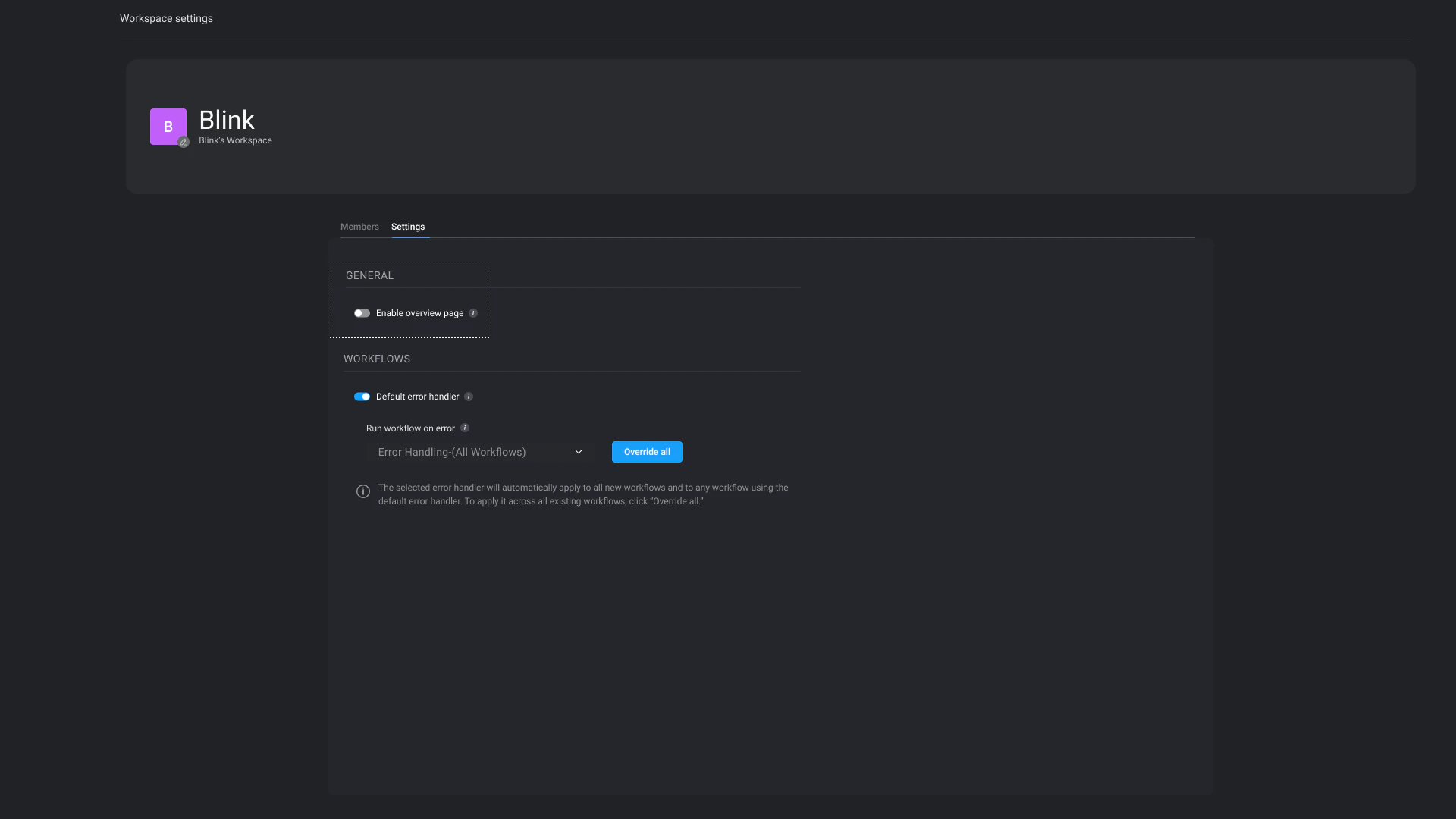
- Members
- Settings
Inviting a New Member to a Workspace (RBAC)
1
Invite a new member to your workspace by navigating to the “Settings” page from the left hand navigation menu.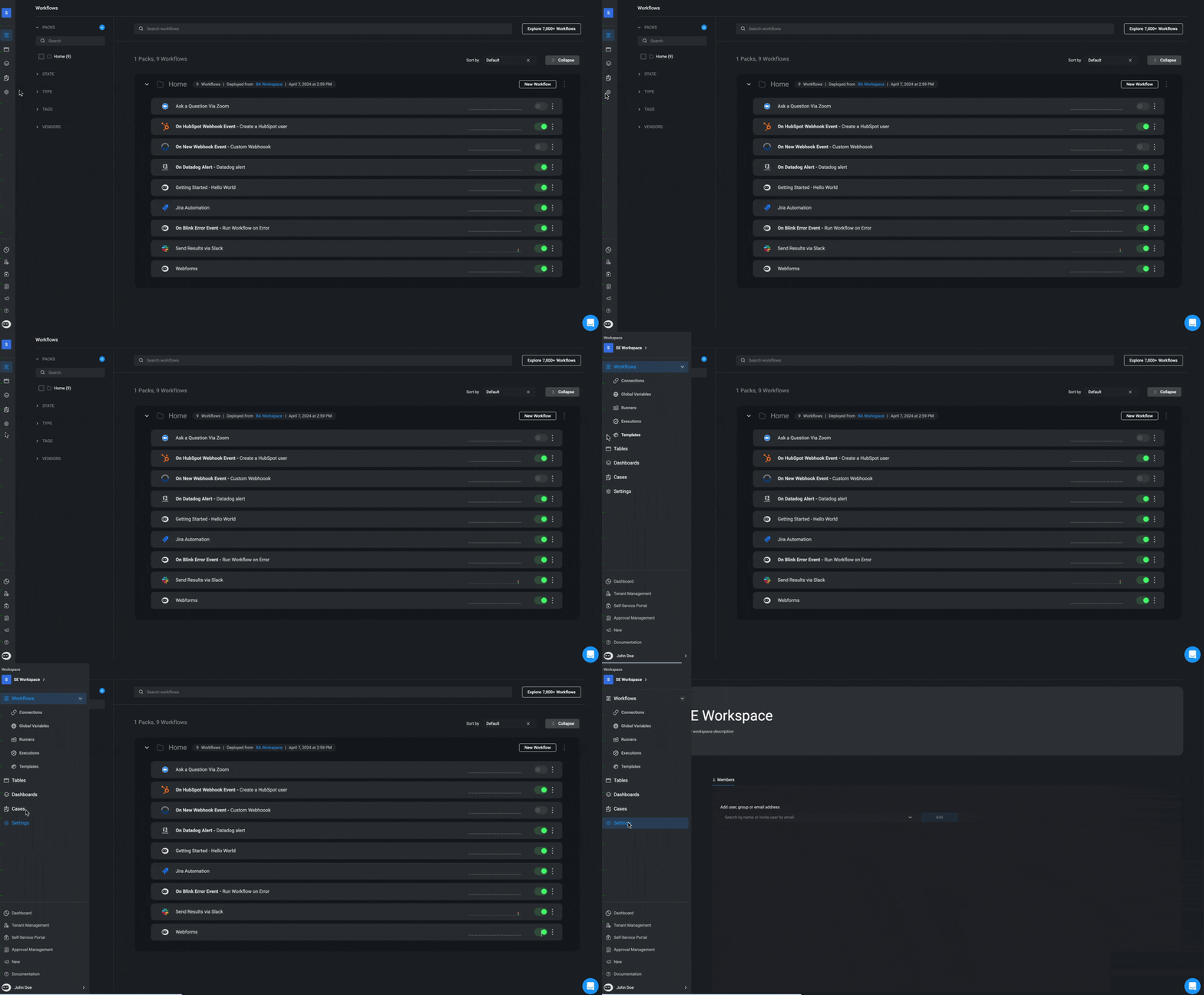
2
A dialogue box opens with the details of the workspace and the option to invite a new member to your workspace. You can invite only a member of the tenant. You can see a list of all the members of your workspace and control their permissions.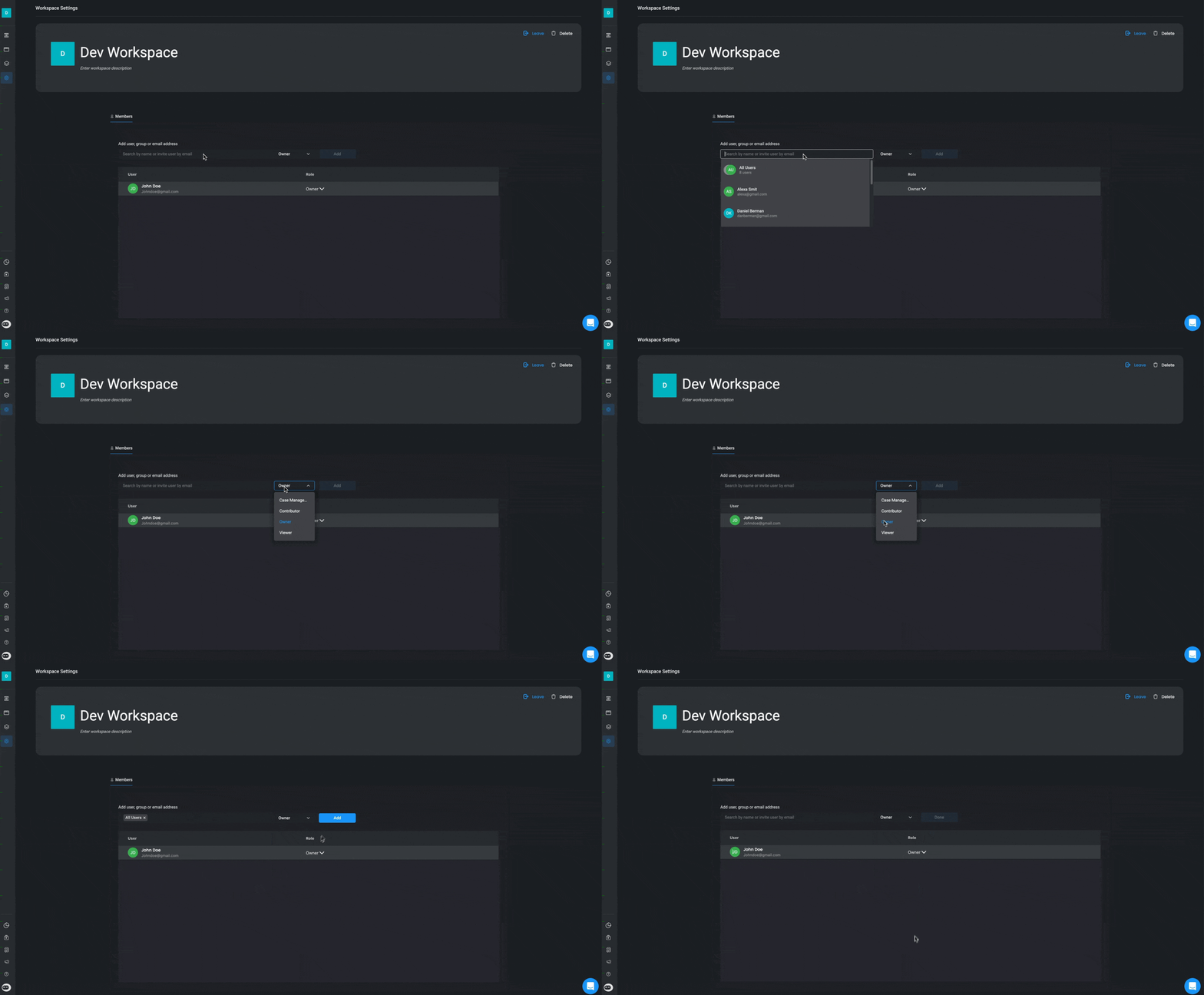
3
Each member invited to a workspace can be assigned one of the following roles:
Note: Every workspace must have at least one owner.
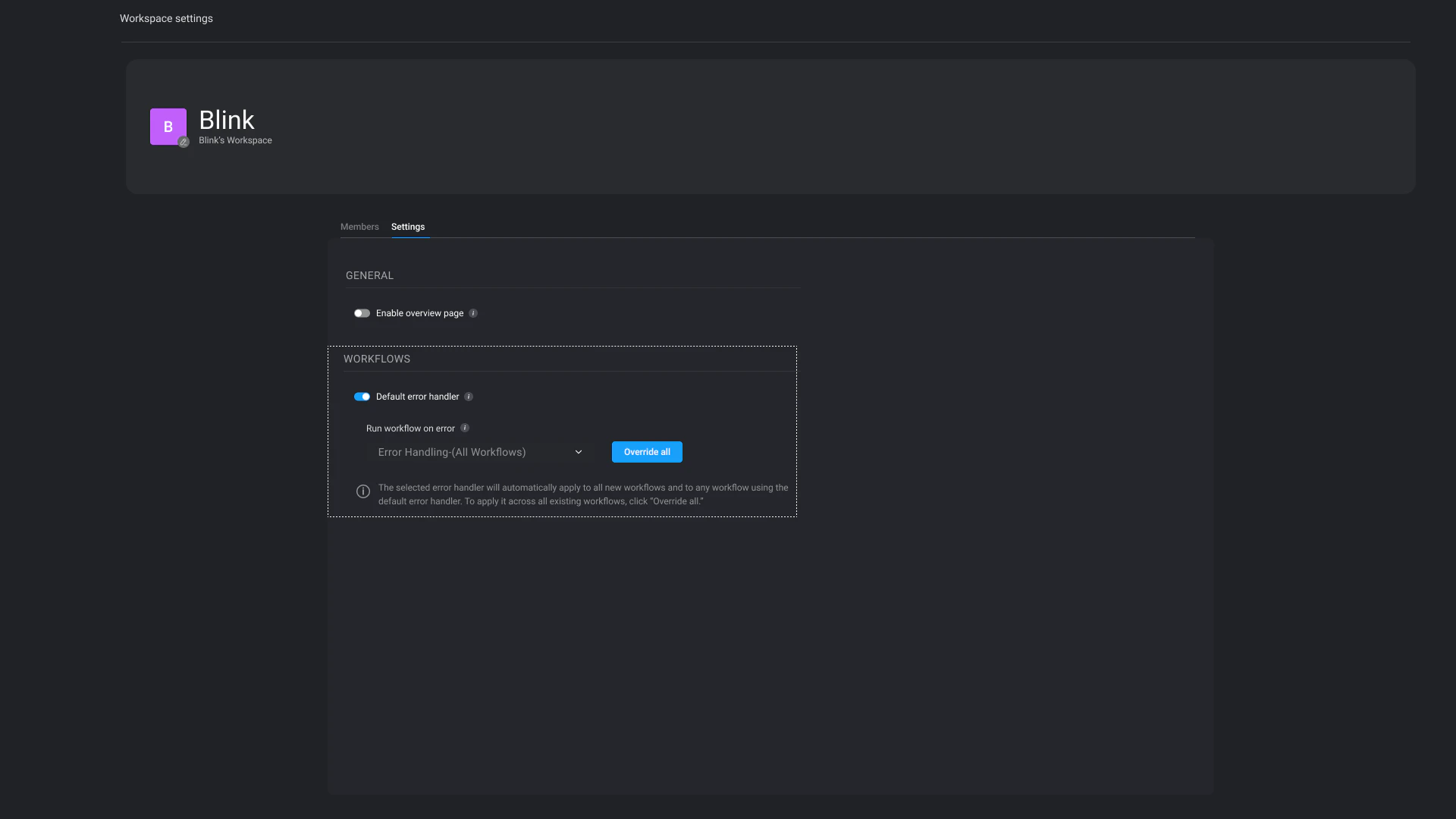
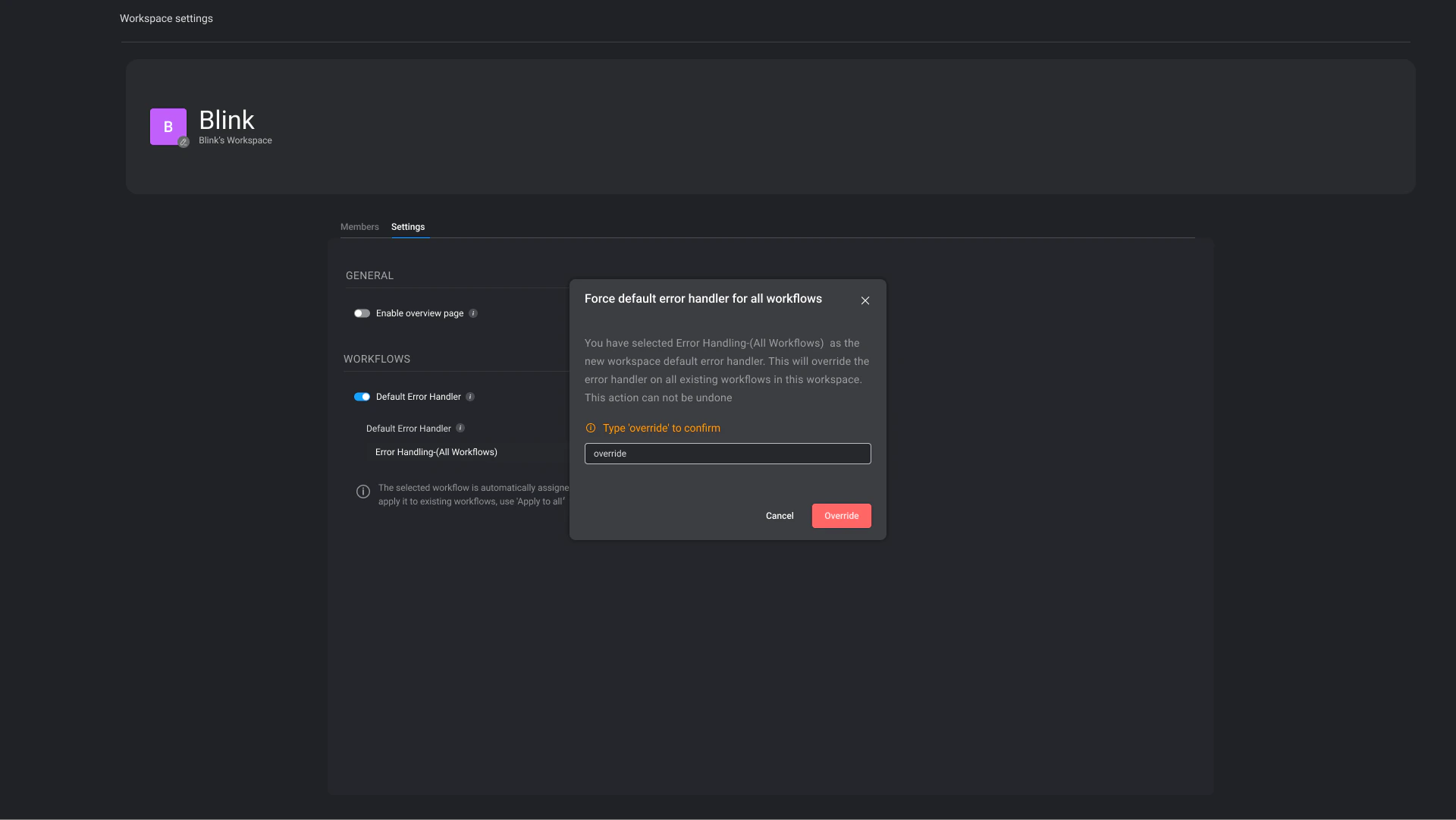
Filtering your Workspaces
In the Workspace Settings, use the ‘Include Personal Workspaces’ toggle in the top-left corner to show or hide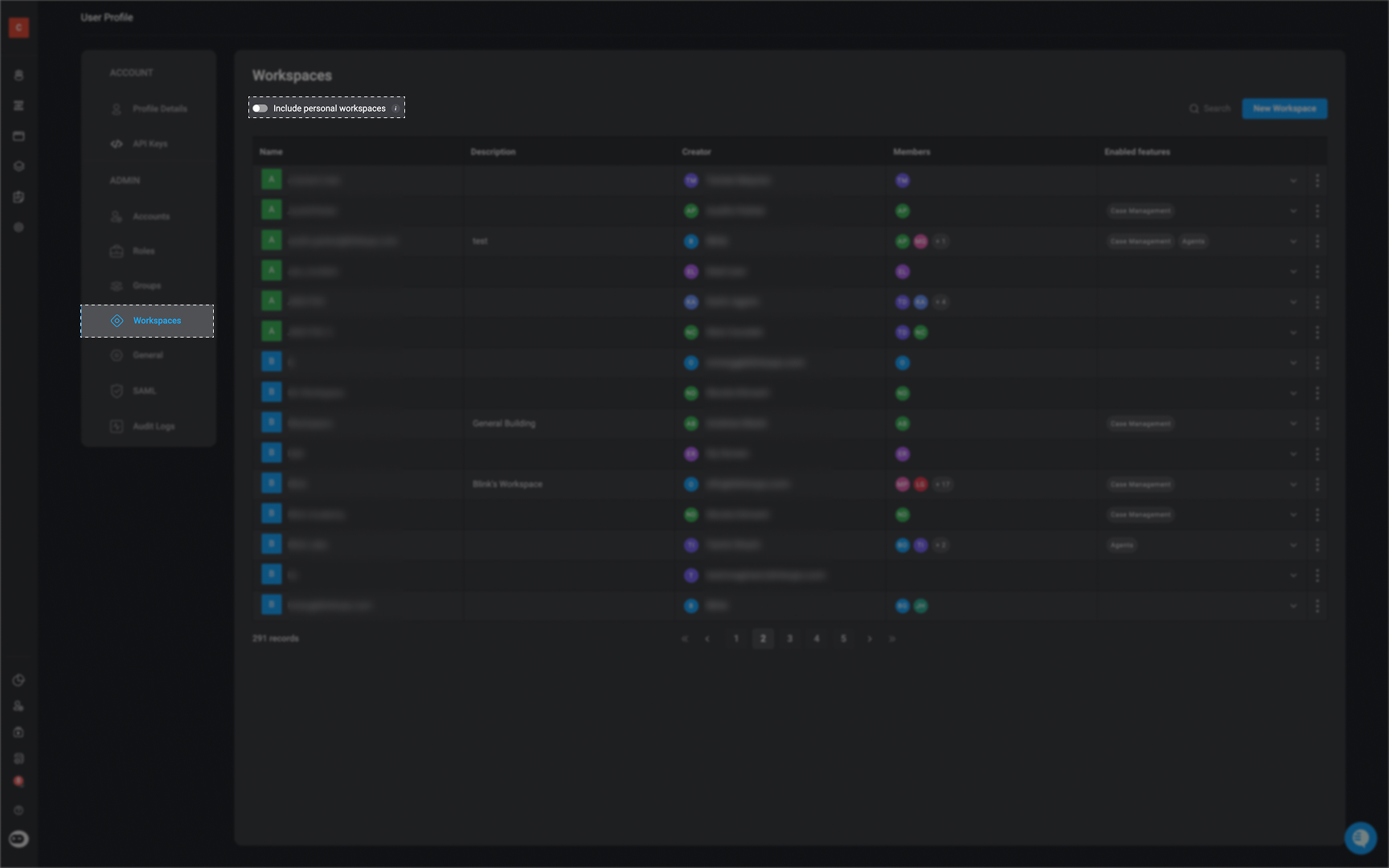
Change your Workspace’s Logo
Navigate to the workspace settings and click the icon next to the colored square with your initials to upload a custom workspace logo.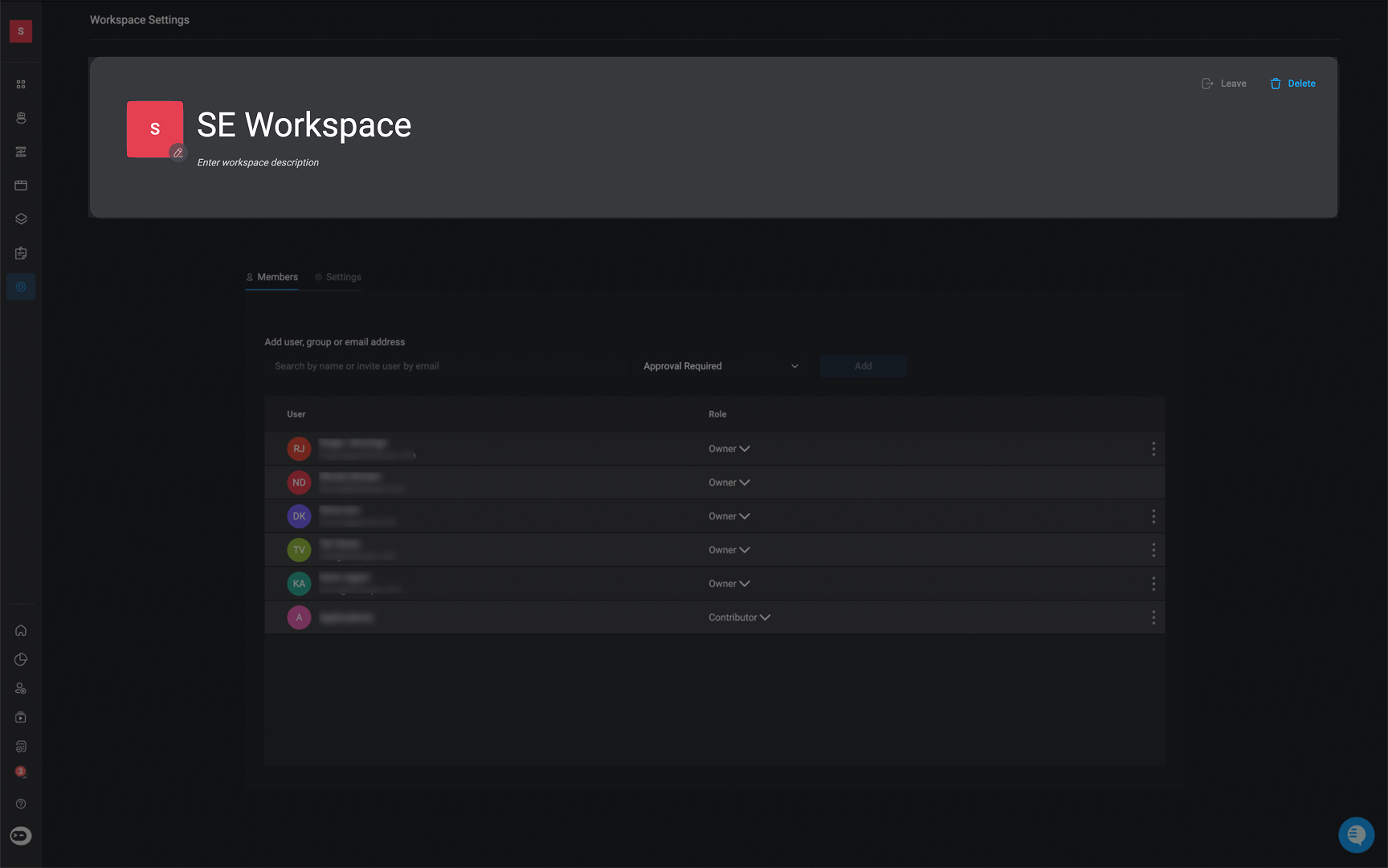
Note: Accepted image formats for upload are
PNG, JPG, or GIF, with a maximum size of 800px × 600px.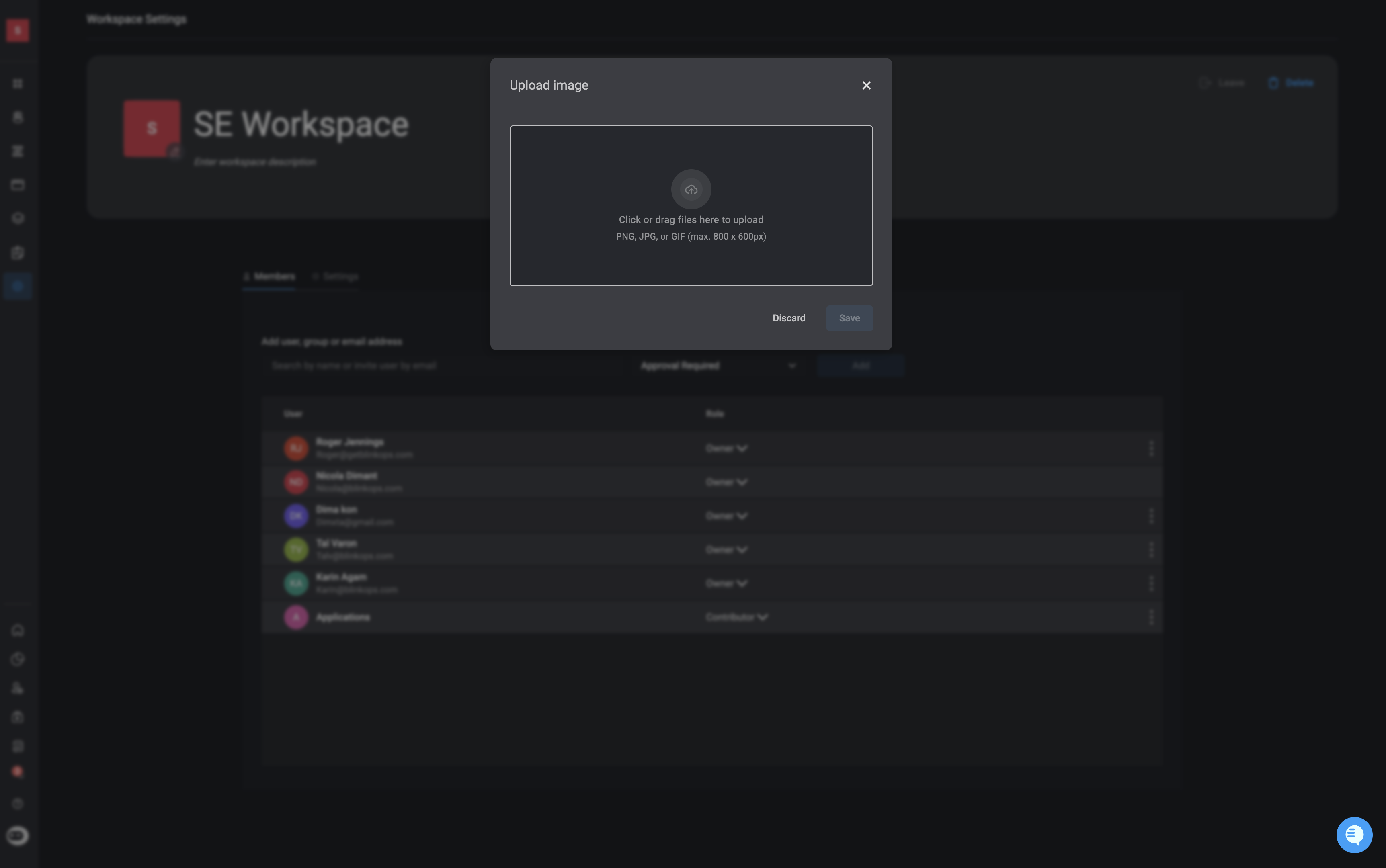
Removing a Member from a Workspace
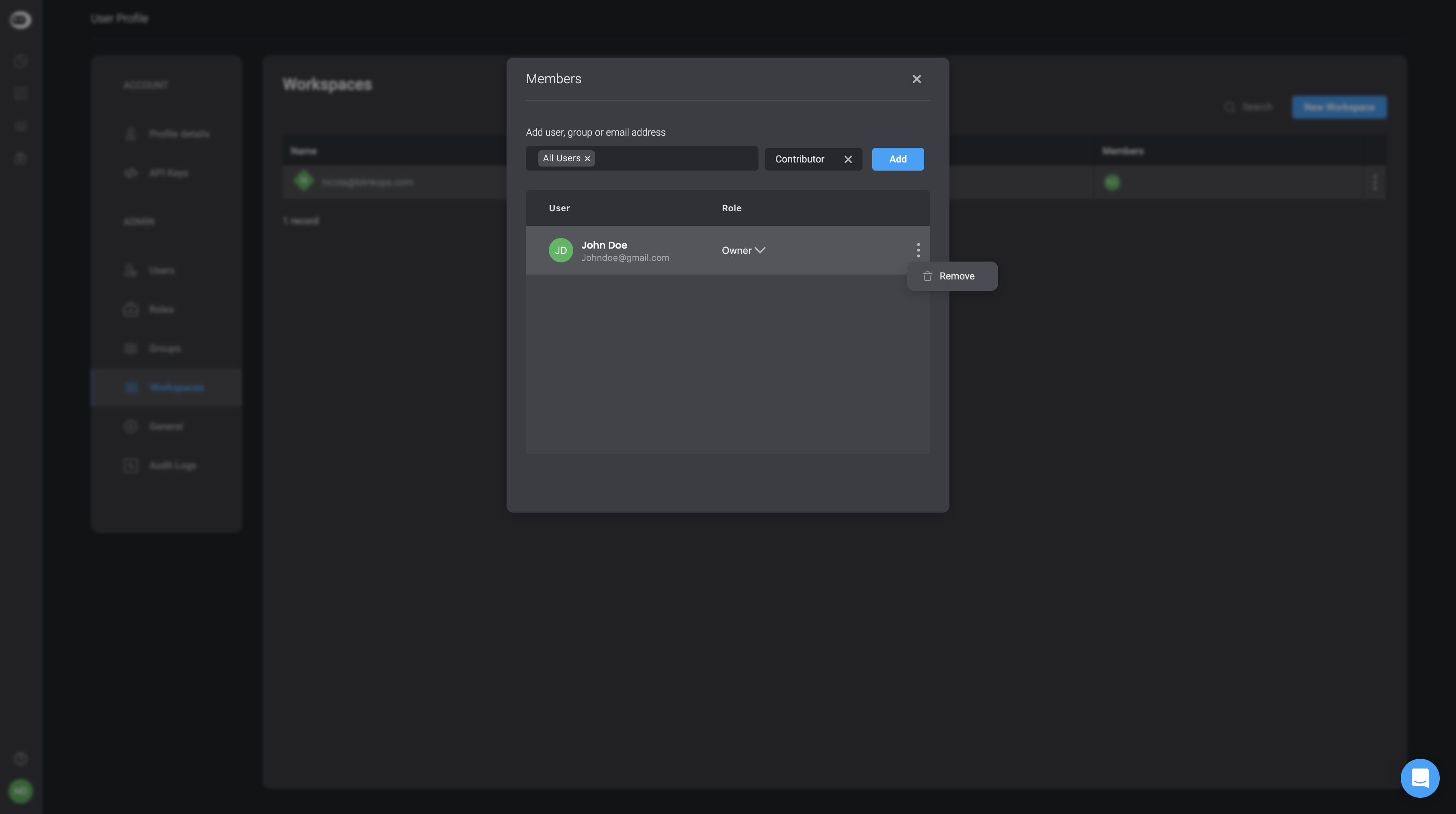
1
If you would like to remove a user from the selected workspace, click on icon next to their name and select the remove option.
Workspace Navigation
1
In the Workspace table, navigate to the chosen workspace by clicking icon on the right-hand side of the row and selecting the Go to Workspace option. This will open the selected workspace in a new tab.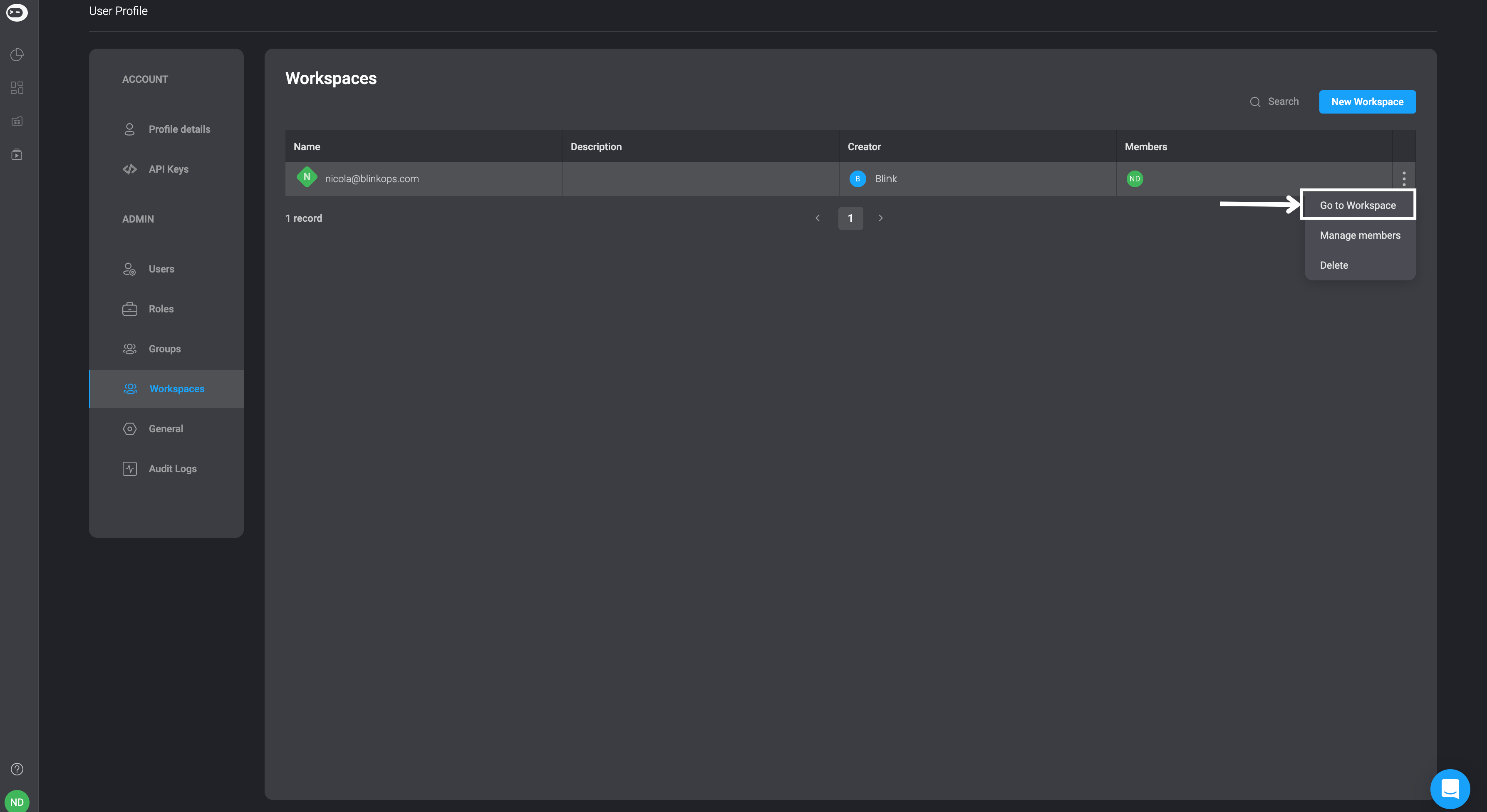
Manage Workspace Members
- Manage Members of a workspace by clicking the icon on the right-hand side of the selected Workspace and select the Manage Members option.
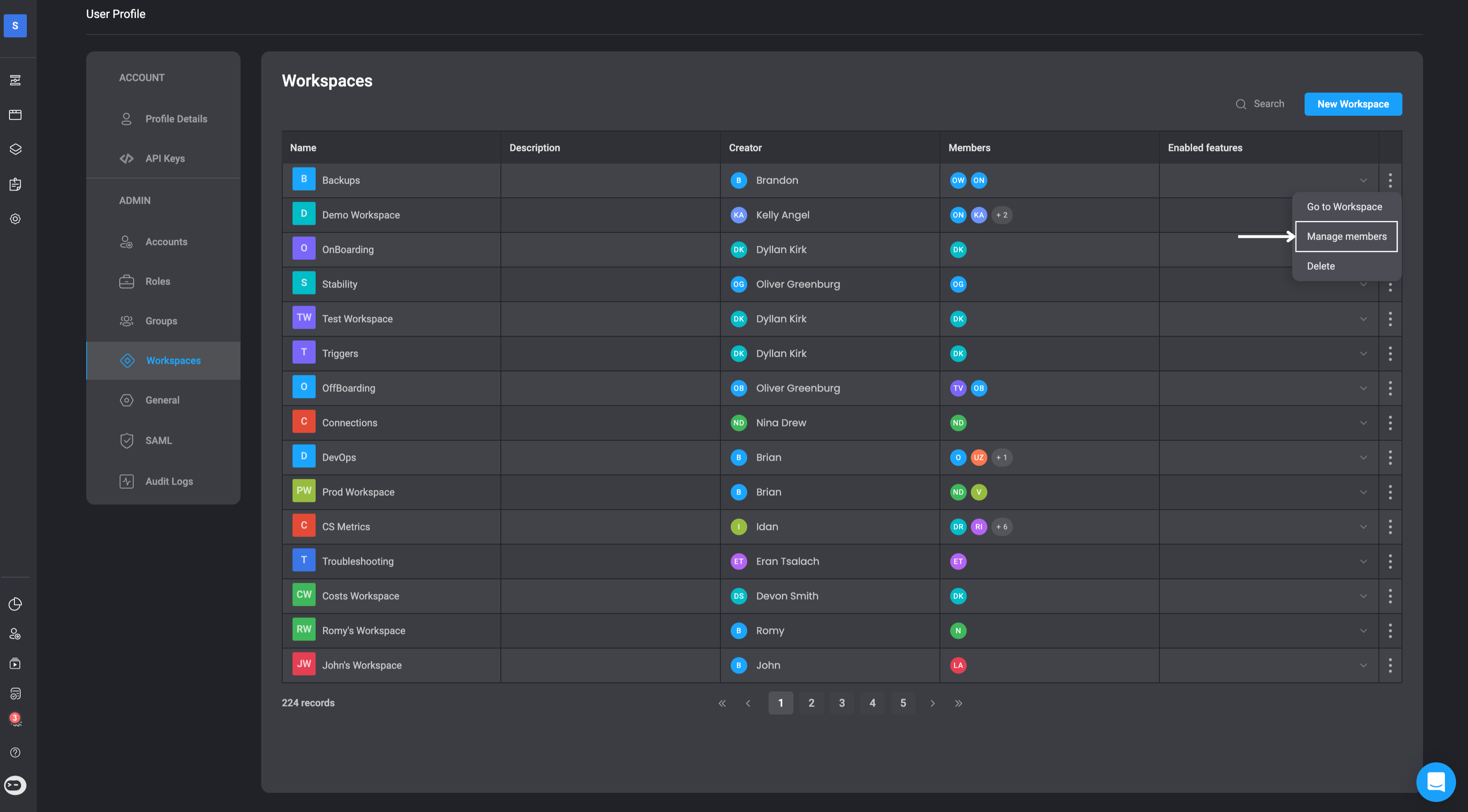
- A popup will appear, where you will have the option to add users or groups to the selected Workspace by entering the name of the user, group or email addresses and then selecting the Add button. You can also assign roles such as Contributor, Owner or Viewer to users in the selected workspace.
Note: If you have created your own custom role, it will also appear in the dropdown menu and you can choose it to assign to the invited user or group.
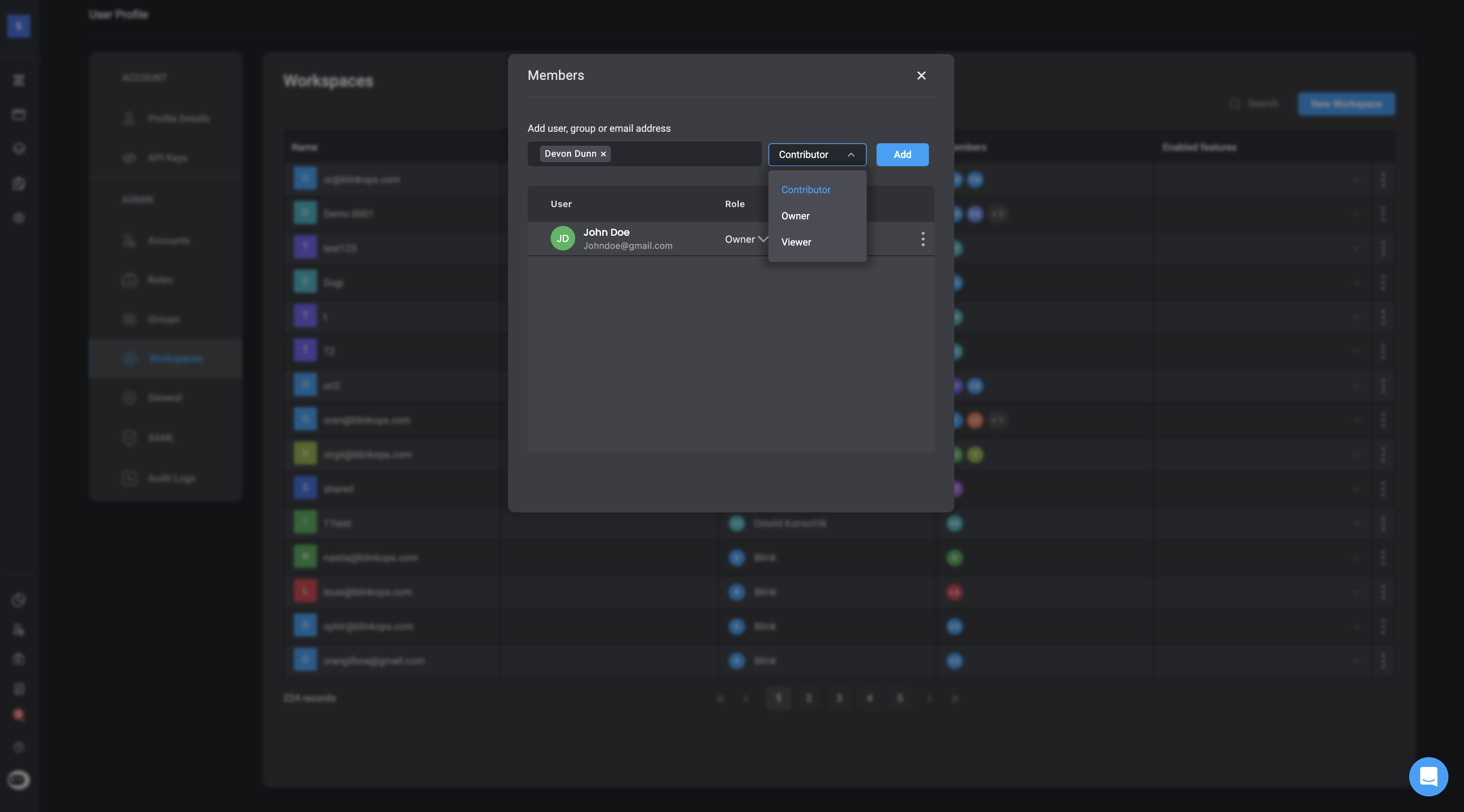
- If you would like to remove a user from the selected workspace, click on icon next to their name and select the remove option.