

Creating Tables
1
Open the Tables Section
In your workspace, navigate to the left-hand sidebar and select Tables. If this is your first time creating a table, click the Create First Table button.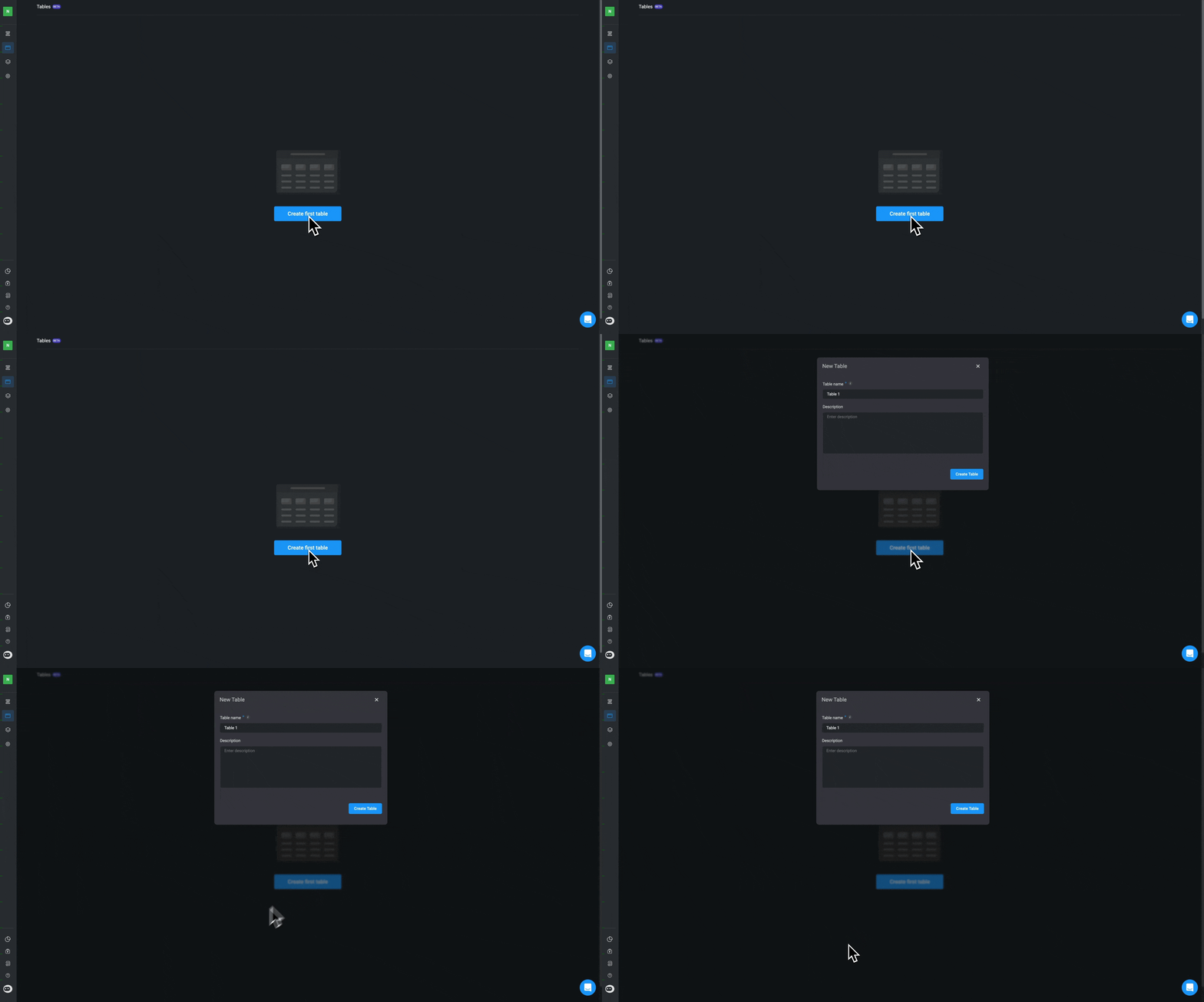
2
Enter Table Details
Define the properties of your new table. You can keep the default table name or customize it, and optionally add a description. Once you’ve entered the details, click Create Table to proceed.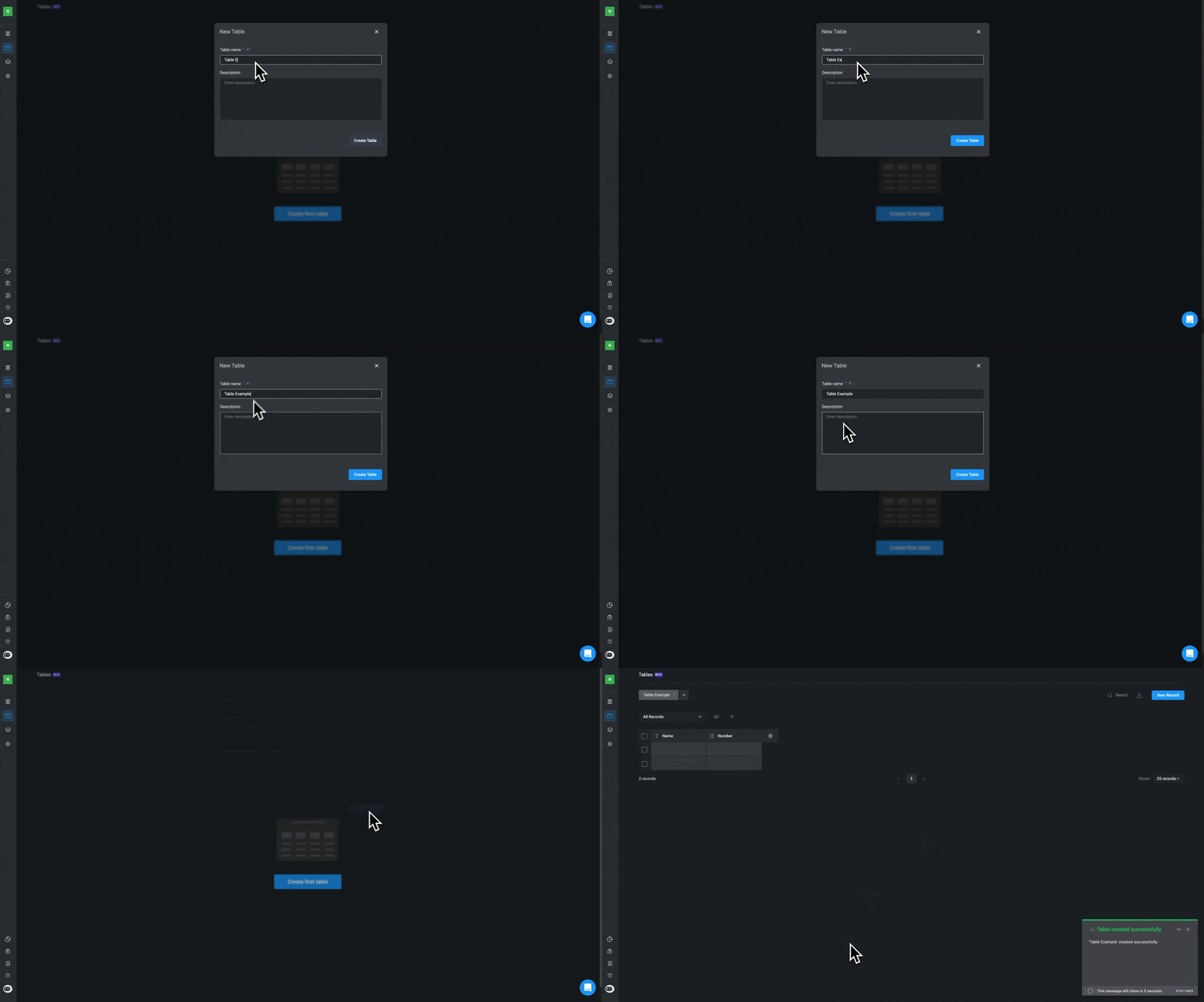
3
View Your New Table
After creation, your new table will appear in the Tables list in the left-hand pane. By default, each new table starts with: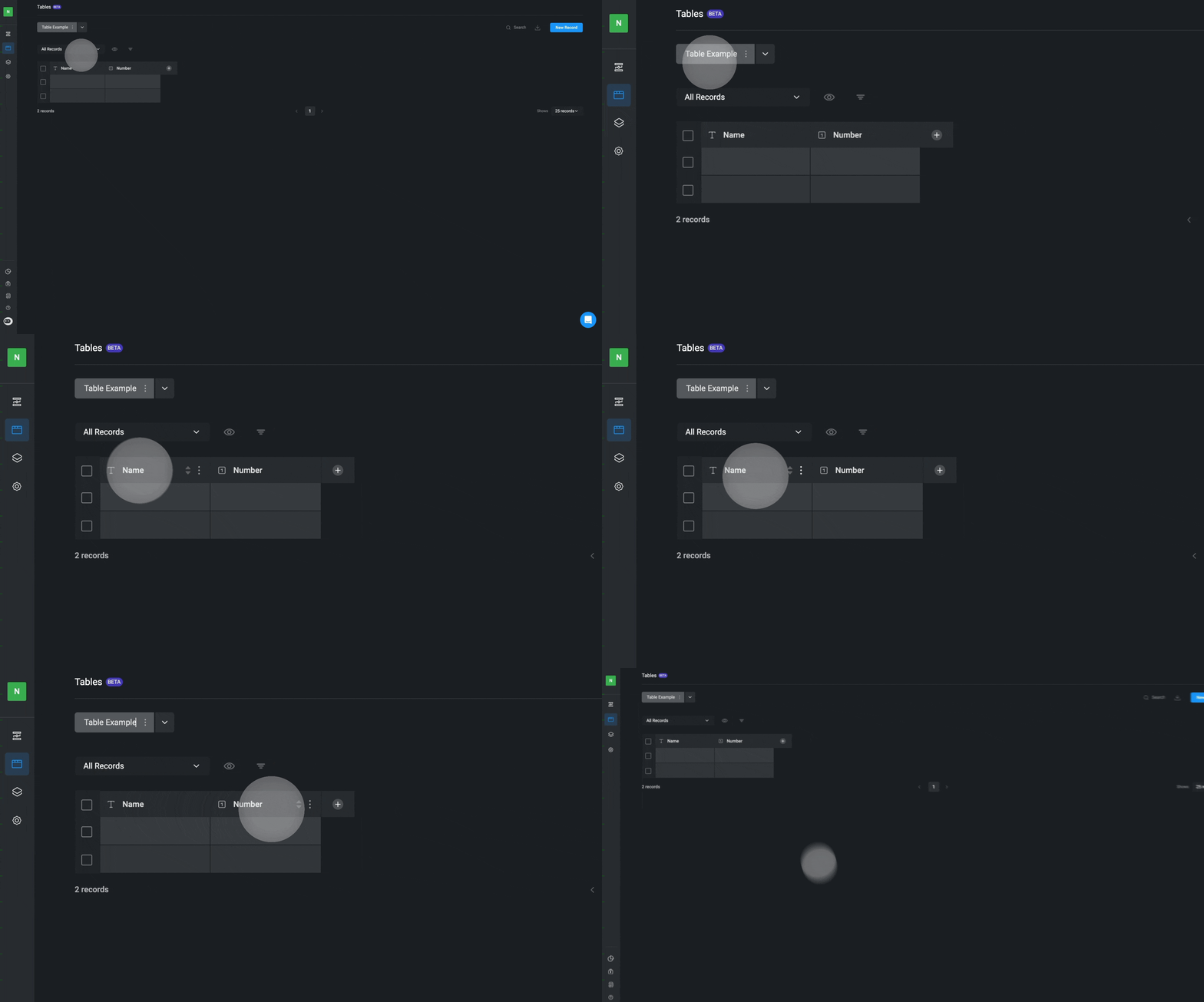
- Two fields: One Text type and one Number type
- Two empty records ready for data input
Adding Table Fields
To add fields to a Table, follow this step-by-step guide:1
Open the Field Editor
Navigate to your table and click the ”+” button next to the field headers.
2
Define the Field Properties
- Enter a Field Name.
- Select a Field Type (e.g., Text, Number, Boolean).
- (Optional)- Set a Default Value.
- (Optional) Configure Advanced Parameters if needed.
IMPORTANT: The Field Type cannot be changed after the field is created.
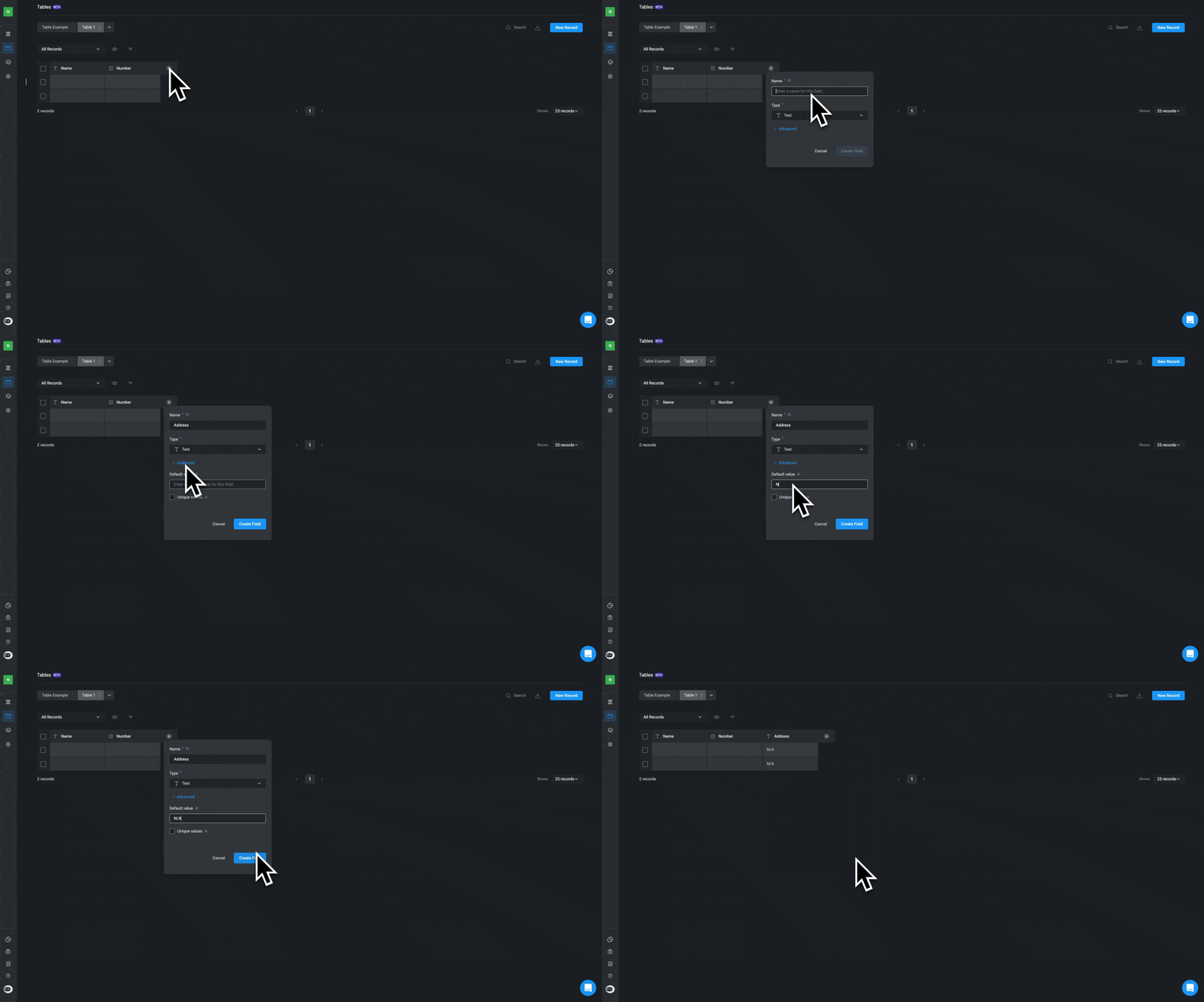
Table Field Types
The following field types are supported:TextLong Textwithrich-textNumberSingle-selectMulti-selectCheckboxDate & TimeUserRisk managementButtonReferenceListsFileVendor
Use the
checkbox field type for boolean values:- If the
checkboxis checked, the boolean value istrue. - If the
checkboxis unchecked, the boolean value isfalse.
Table Field Types with Unique Values
This feature ensures that no duplicate values are allowed in a particular column within the table. The Text, Numbers, Users, and Time field types only offer the option to enable unique values option within a column.Enforcing Unique Values in a Table Field
The Unique Values feature ensures that each entry in a specific column is distinct, preventing duplicate values. This can be enabled for the following field types:TextNumbersUsersTime
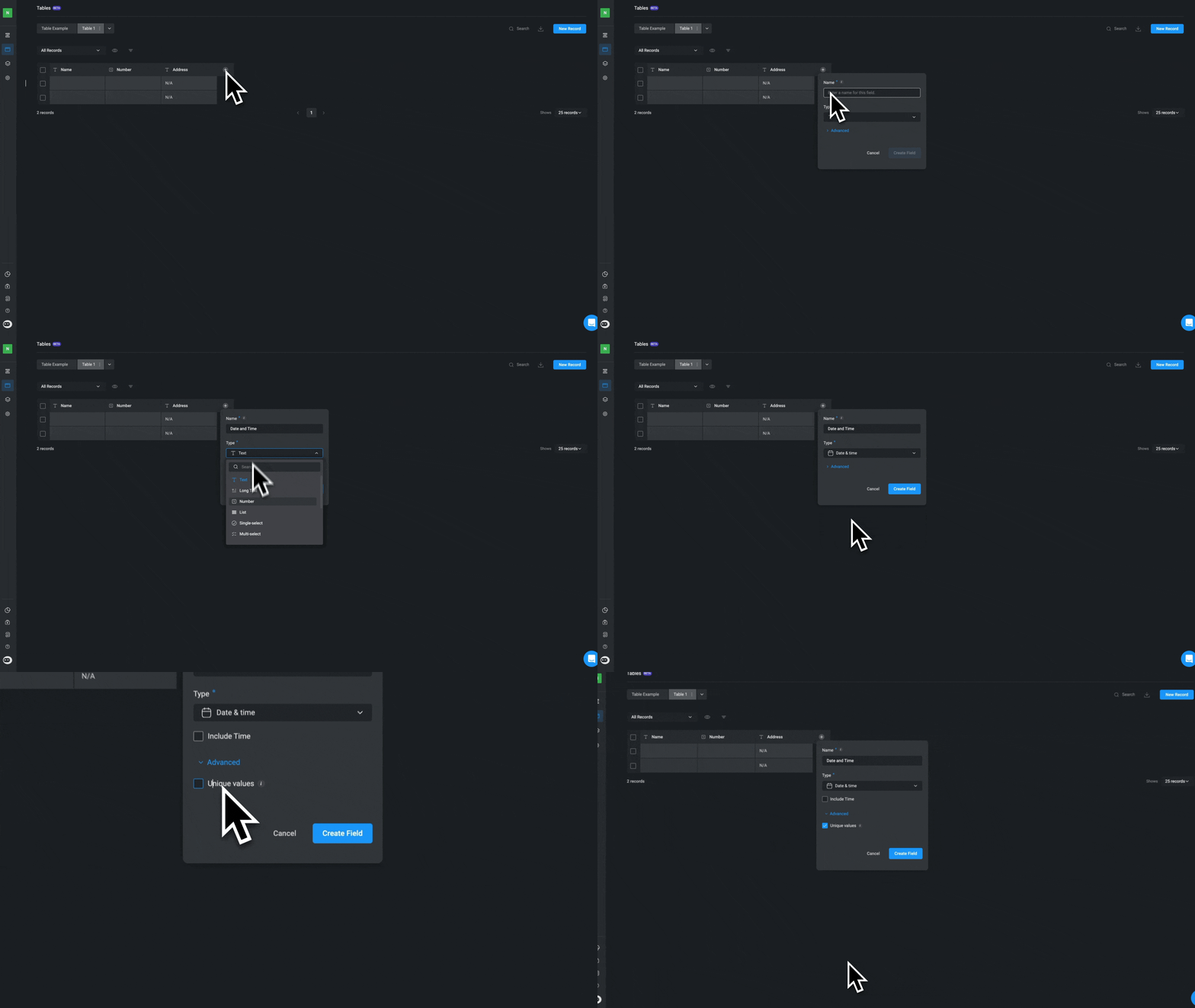
Table Field Settings
Field settings let you manage individual columns in a table, including editing field details, pinning columns, copying SQL column names, and deleting fields. To access these settings, hover over the relevant field (column) and click the menu.- Edit: Modify the field’s settings, such as its display name or other configurable properties.
- Pin: Pin the column to keep it visible while navigating horizontally across the table.
- Copy SQL Column Name: Copy the field’s SQL column name for use in queries or configurations that reference the field by its SQL name.
- Delete: Remove the field (column) from the table.

Table and Fields - Display Name vs. SQL Name
Tables and fields in Blink have two names: a Display Name and an SQL Name (internal name). The Display Name is the human-readable label shown in the UI, while the SQL Name is the identifier used by workflows, API requests, and SQL queries.
What Happens When You Rename a Table or Column?
Renaming the display name changes only the label shown in the UI. The SQL name remains unchanged to preserve existing references and prevent workflows and API calls from breaki
By default, renaming a table or field changes only its Display Name. Its SQL Name remains unchanged to preserve existing references and prevent workflows and API calls from breaking.
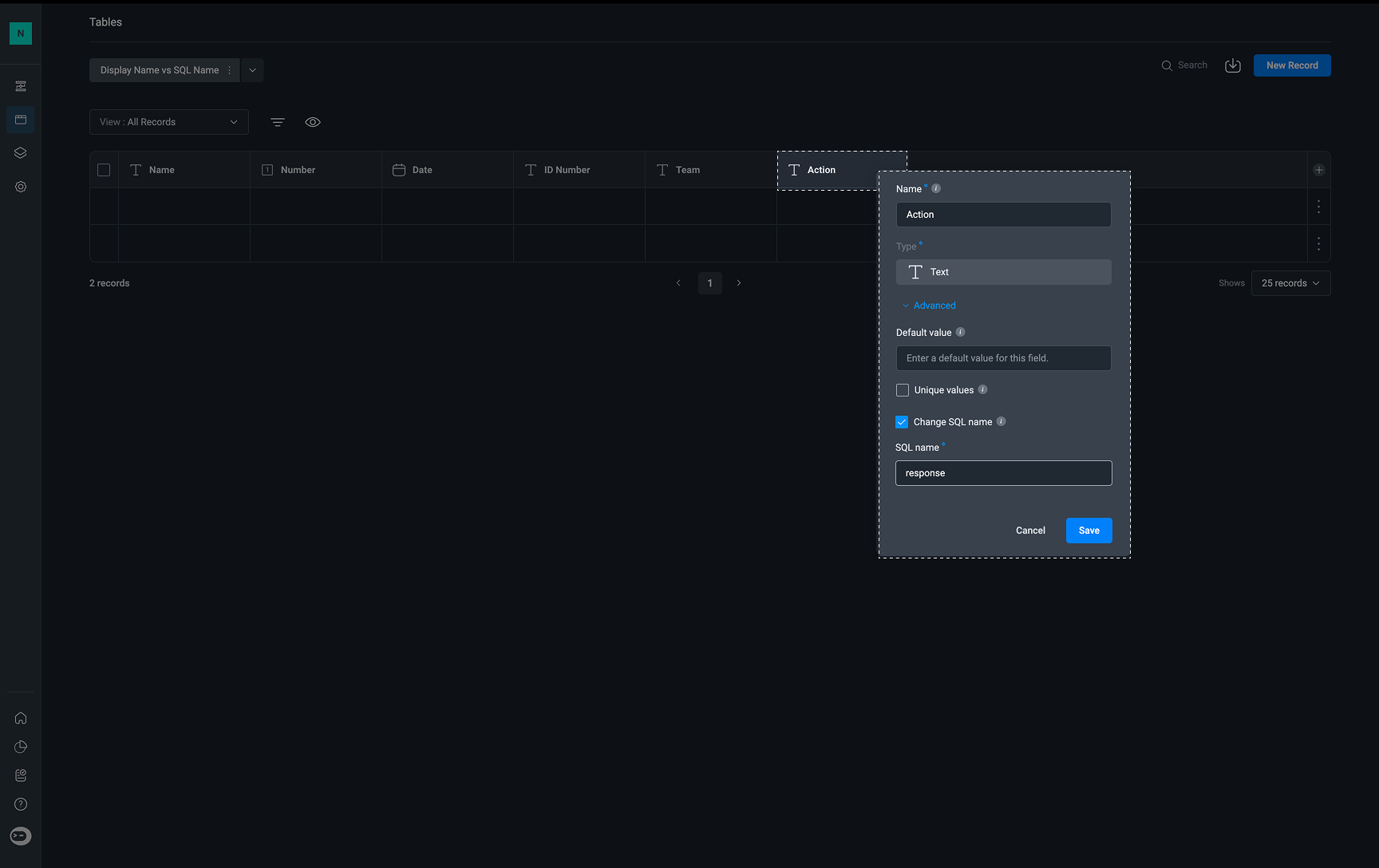
For example, when the table field
Response was renamed to Action, its names became:
-
Display Name:Actions -
SQL Name:response
Changing the SQL Name
To change a field’s SQL Name, click the three-dot menu next to the field, select Edit, then select Change SQL name and enter the new SQL Name.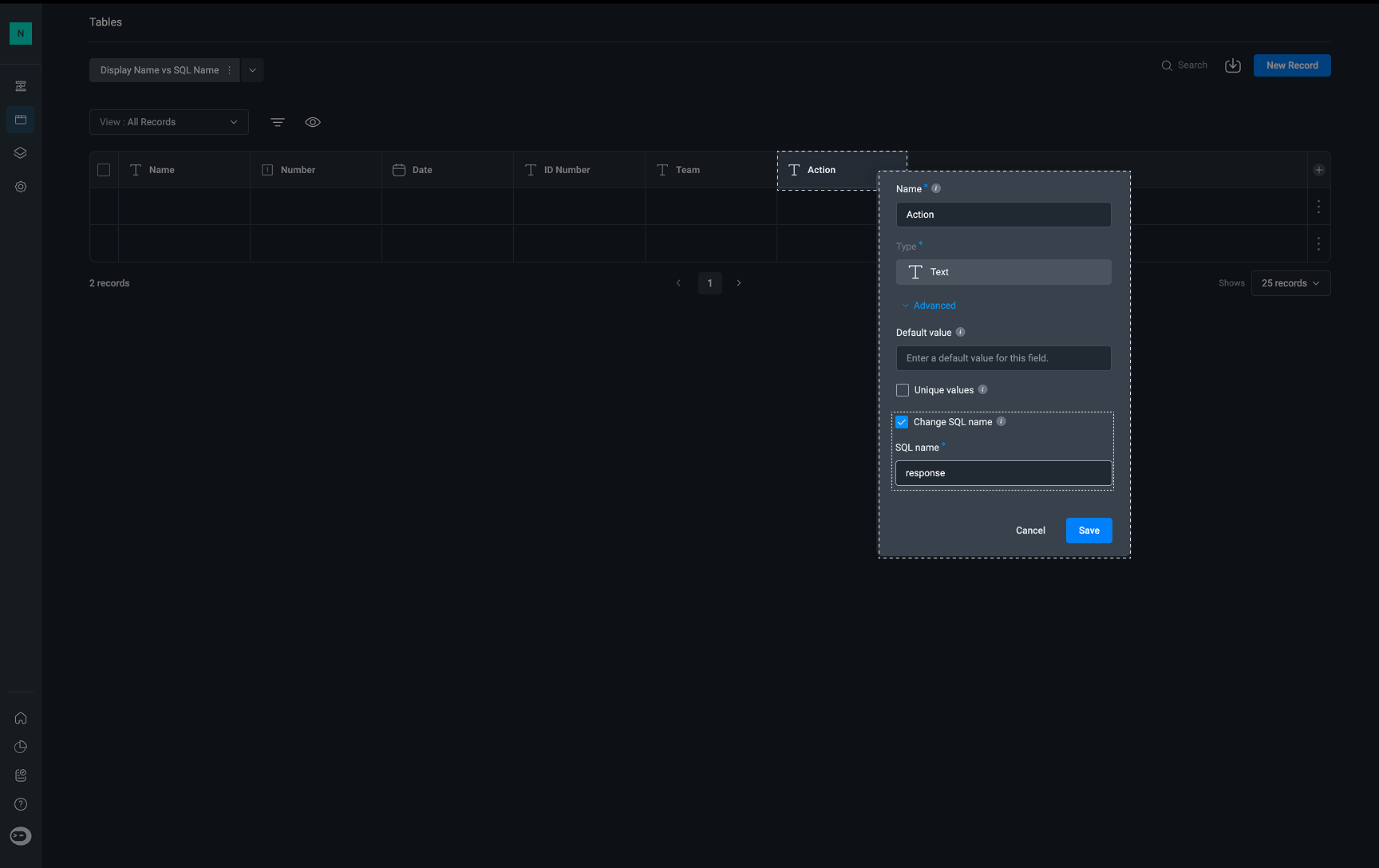
Retrieving Table ID or Field ID
- Copy the Table ID
- Copy the Field ID
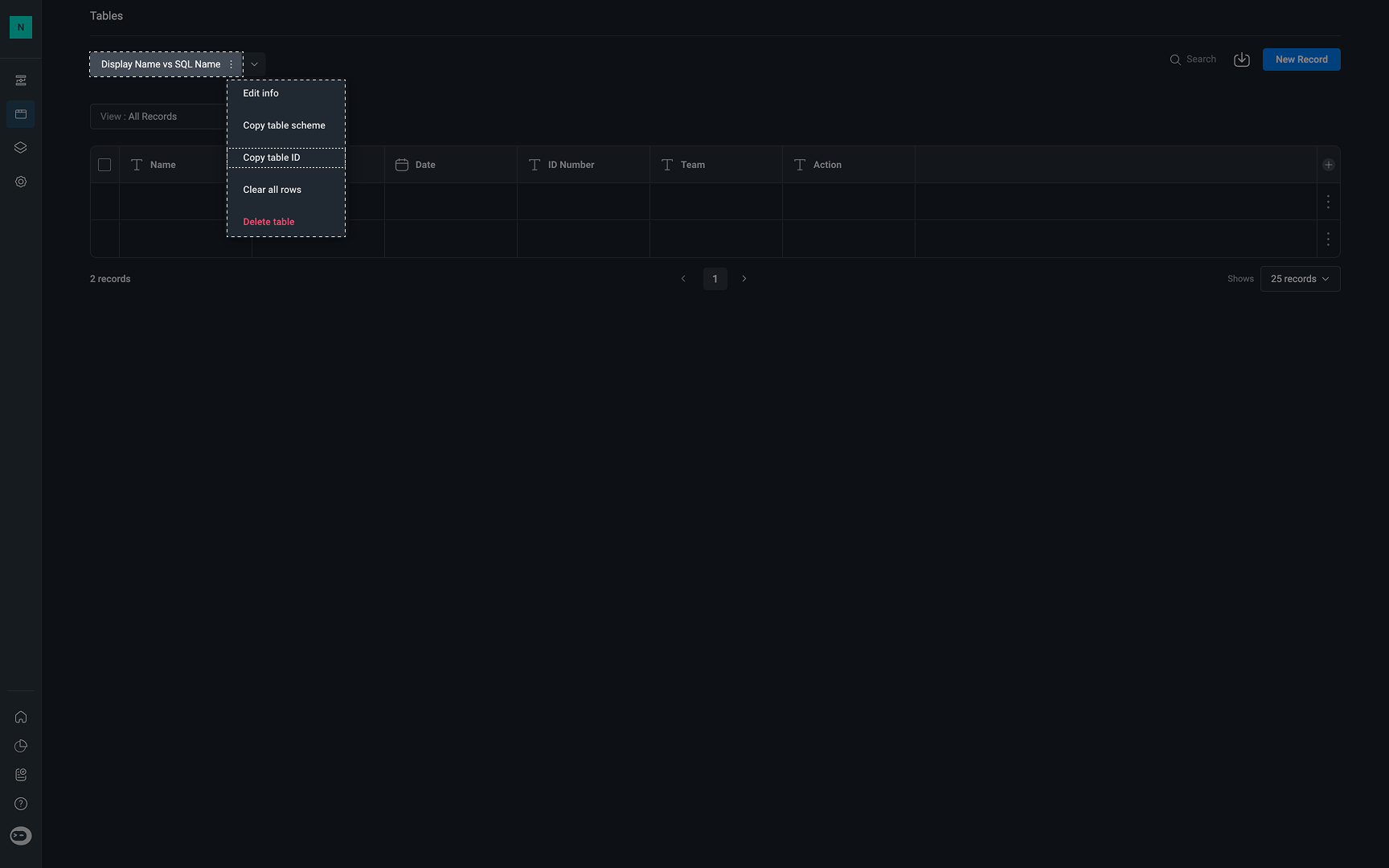
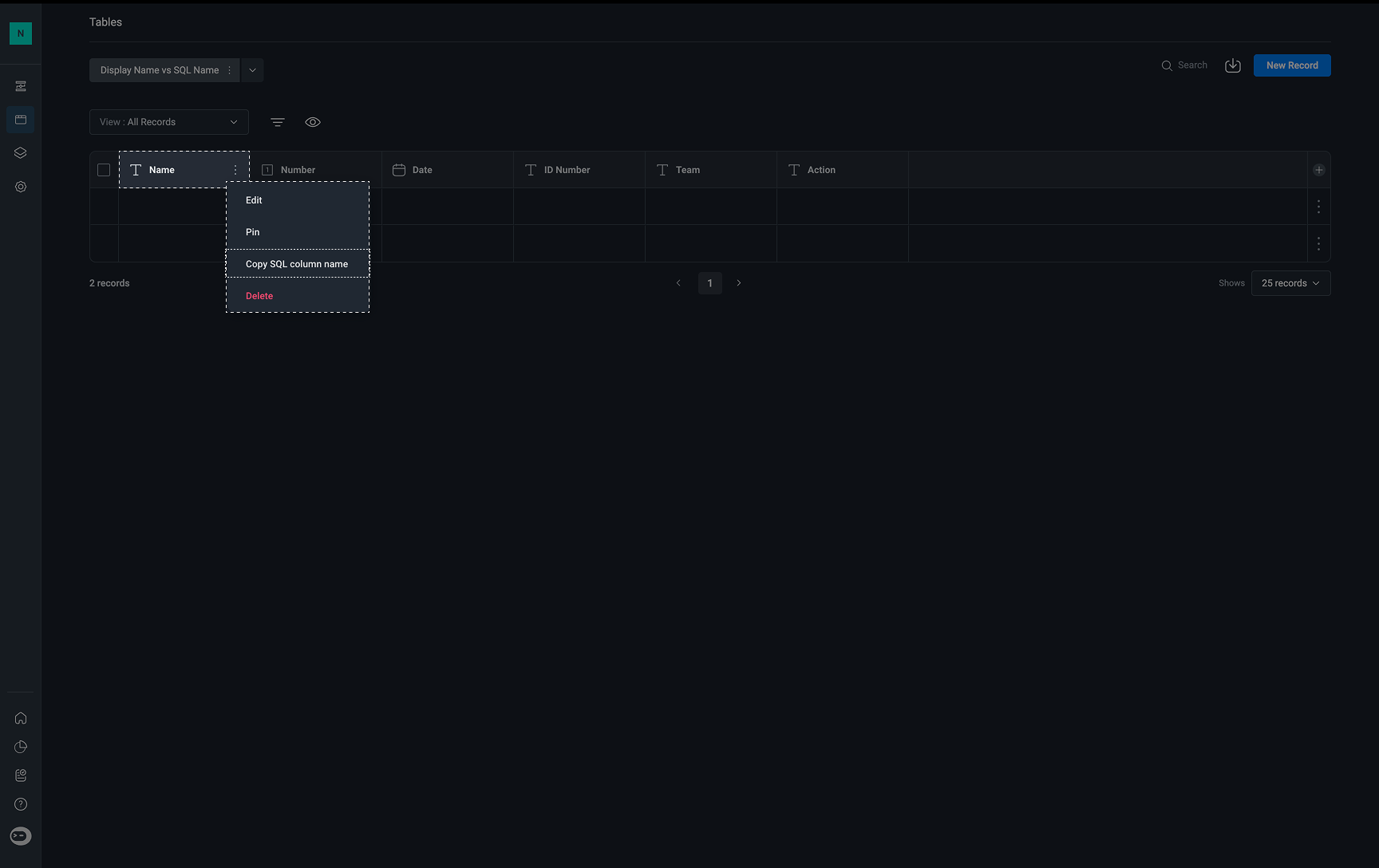
Table Settings
Managing tables and their records helps you keep your data accurate and organized. You can edit individual records, delete records you no longer need, and manage table settings to update table information, copy table details, or remove data. Hover over the relevant name of the table, click on the icon to access the settings Edit: Edit the table name or description. Copy Table Schema: Copy the table’s schema, including its column definitions and structure. Copy Table ID: Copy the table’s unique identifier for use in configurations or other areas of the platform. Clear All Rows: Remove all records from the table while keeping the table and its schema intact. Delete Rows: Remove rows from the table according to the available deletion options
Adding Additional Tables
To add and create additional tables- Click the downward-facing arrow next to the existing tables.
- Select Add Table.
- Enter the necessary details and click Create Table.
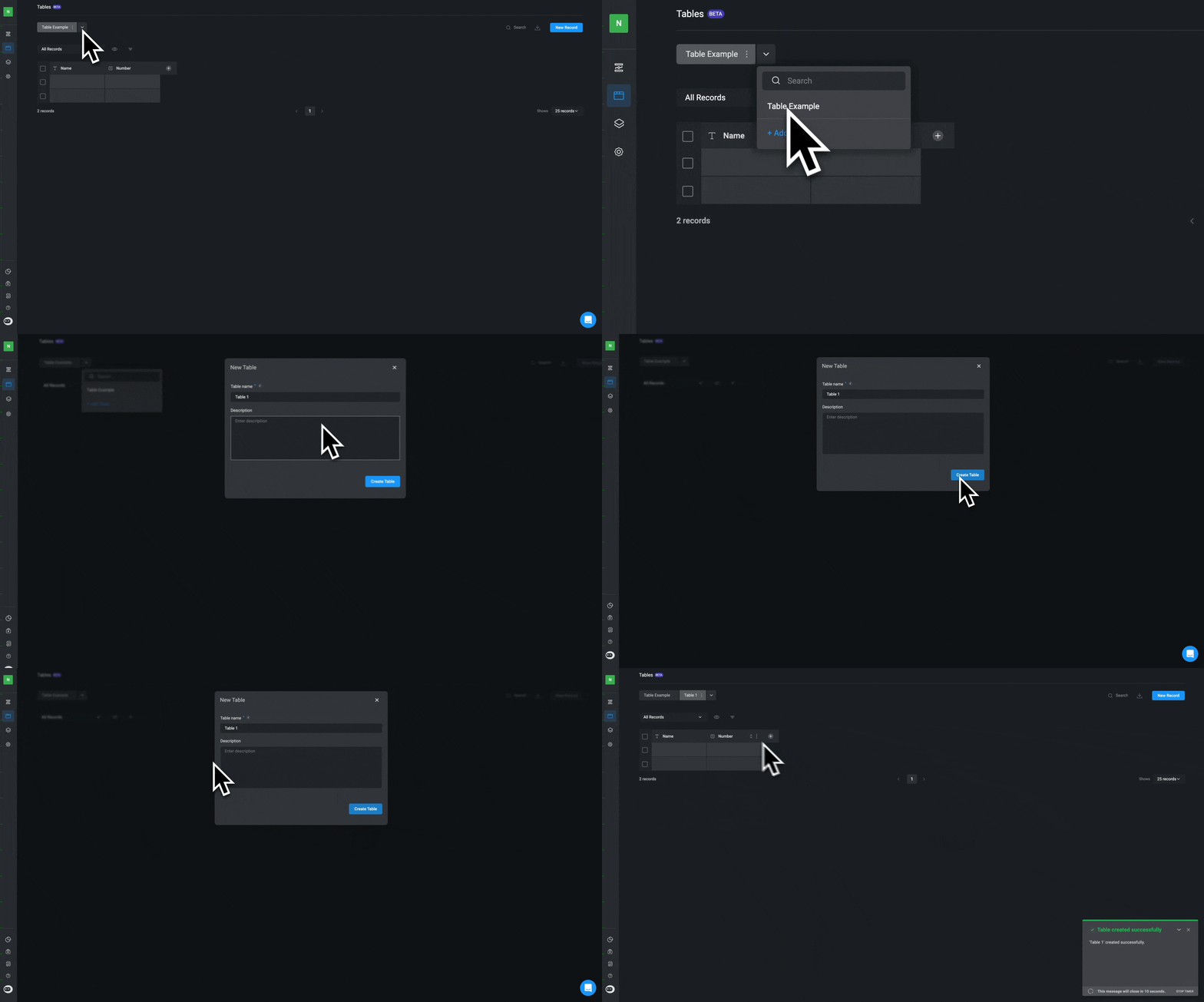
Table Record Settings
To add more records to a Table, click the New Record button located at the top-right corner. Fill in the required data for the new record and click the “Add” button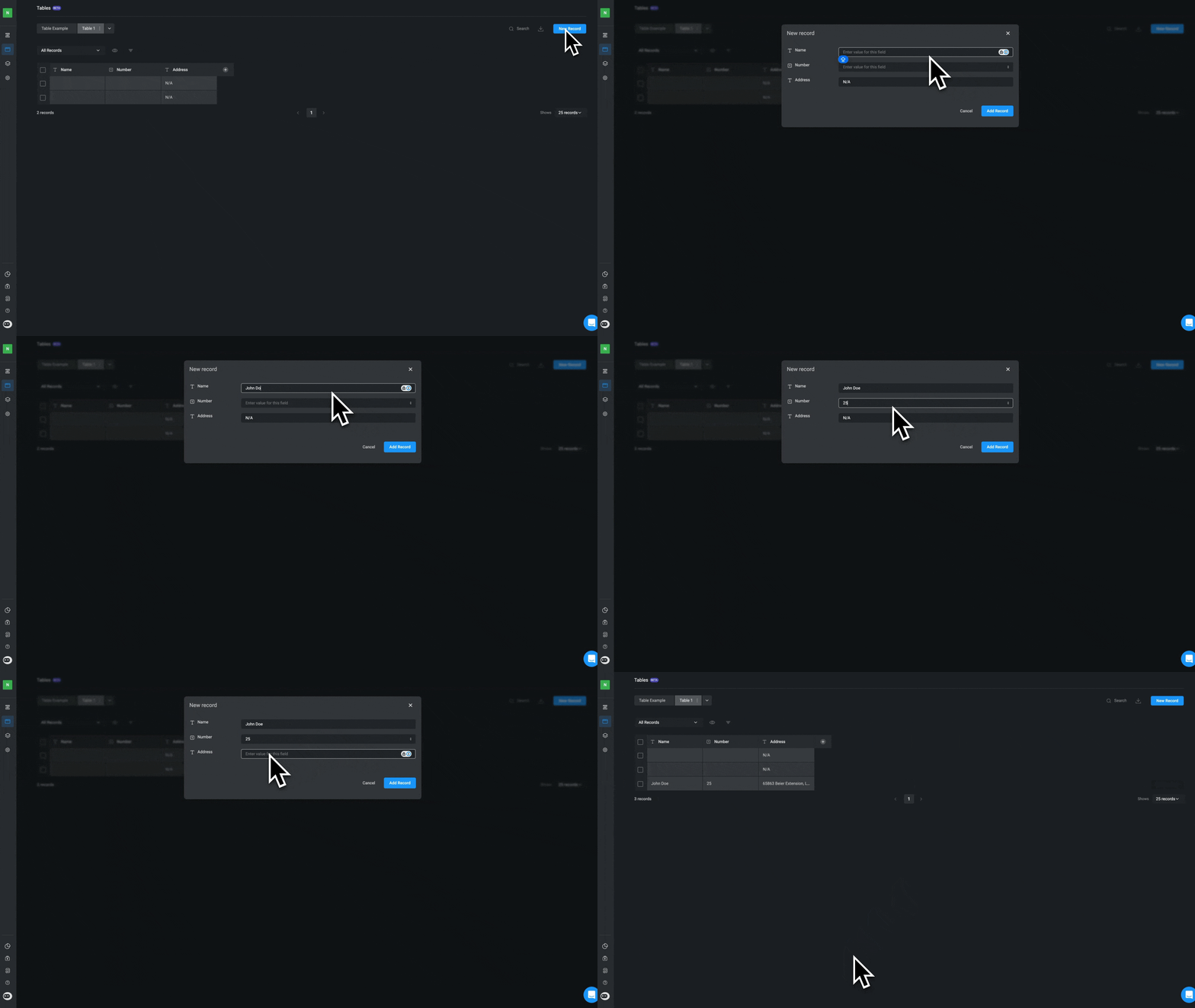
Interactive Guide - Tables
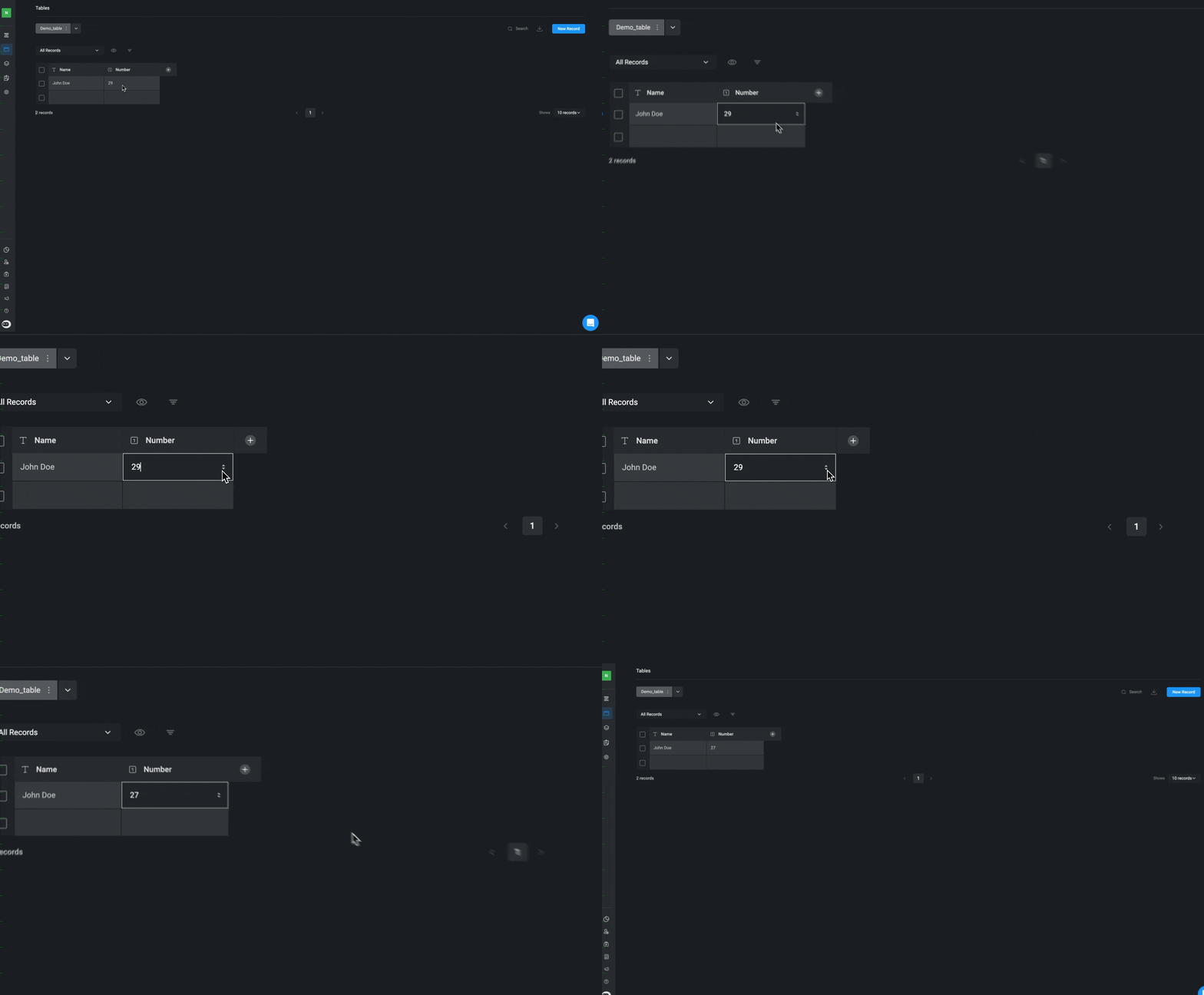
You can also refer to the following tutorial guides for a more in-depth understanding of how to create a table, add a new table record and add table fields.Create your First Table
Create your First Table
Add New Table Records
Add New Table Records
Add a Table Field
Add a Table Field
Related Articles
Using Tables in Workflows
Learn more about creating and using table actions in Workflows
Viewing Tables
Learn more about filtering, sorting, ordering and browsing the table records
Table System Limits
Learn More About Table Limitations