

v10.0
Alert processing is the initial stage of the alert lifecycle, responsible for transforming raw alerts ingested from third-party sources into structured data that can be used for case management, investigation, enrichment, and response. It standardizes incoming alert data and determines how each alert should be processed within the platform.
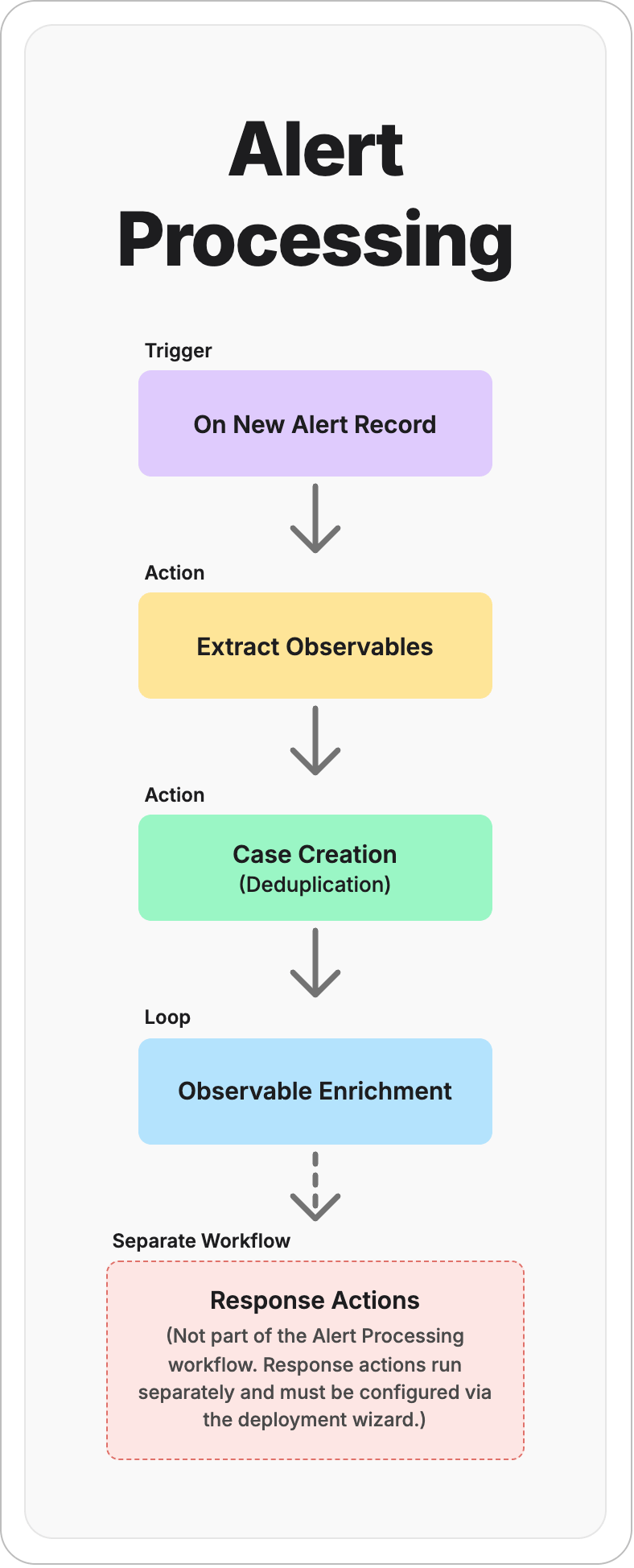
When a new alert is ingested, the alert processing workflow extracts relevant observables from the alert payload using the relevant Observable Extraction Rules. These observables can include IP addresses, URLs, file hashes, hostnames, and usernames, and provide the foundation for subsequent enrichment, deeper investigation and remediation.
The workflow then applies the configured Deduplication Rules to determine whether the alert should be associated with an existing case or used to create a new case. Once the alert is associated with a case, its extracted observables are routed to the appropriate enrichment sources based on their observable type, providing additional context for analysts and to further help with deeper investigation.
This processing sequence ensures that alerts are consistently parsed, correctly associated with cases, and enriched with relevant context before they proceed to subsequent stages of the alert lifecycle.
Flow Diagram Showing the Alert Processing Phase
Trigger - On New Alert
The On New Alert event-based trigger initiates the ‘Process Alert’ workflow whenever a new alert is ingested from a third-party source configured through the Deployment Wizard. It starts the alert processing phases for observable extraction, case deduplication, and observable enrichment.Extract Observables Phase
The Extract Observables action analyzes the incoming alert payload and extracts relevant observables, such asIP addresses, URLs, file hashes, hostnames, and usernames. These observables provide the foundation for subsequent enrichment and deeper investigation.